SDGs


Water management is an important factor for the university. Kasetsart University has many campaigns on projects or activities of energy conservation, water management in the workplace, the operation of underground water storage ponds, wastewater treatment, recycling water, the use of energy saving equipment; these campaigns are meant to promote and support both students, personnel in the organization to have the attitude of conserving energy as well as participating in the activities to change the old behaviors such as stop wasting the energy, and reduction of the use of natural resources in the wrong way.
Project or conservation activities in water use.
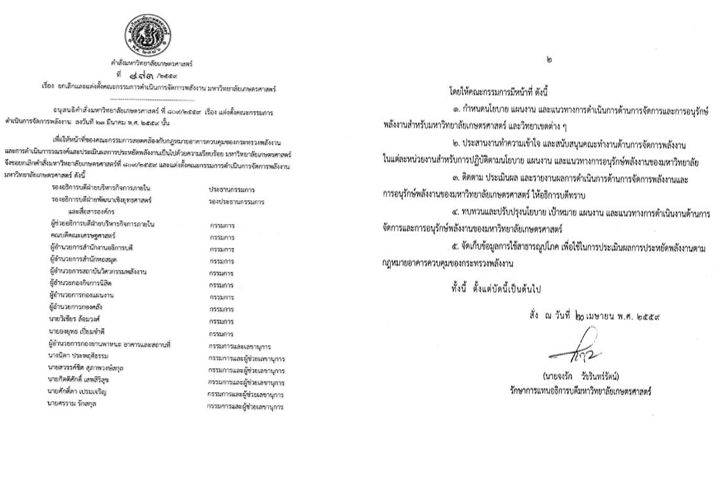
Kasetsart University has appointed of the Board of Directors for Energy Management, to deciding the Policy Formulation, Implementation Plan and the University’s energy conservation guidelines
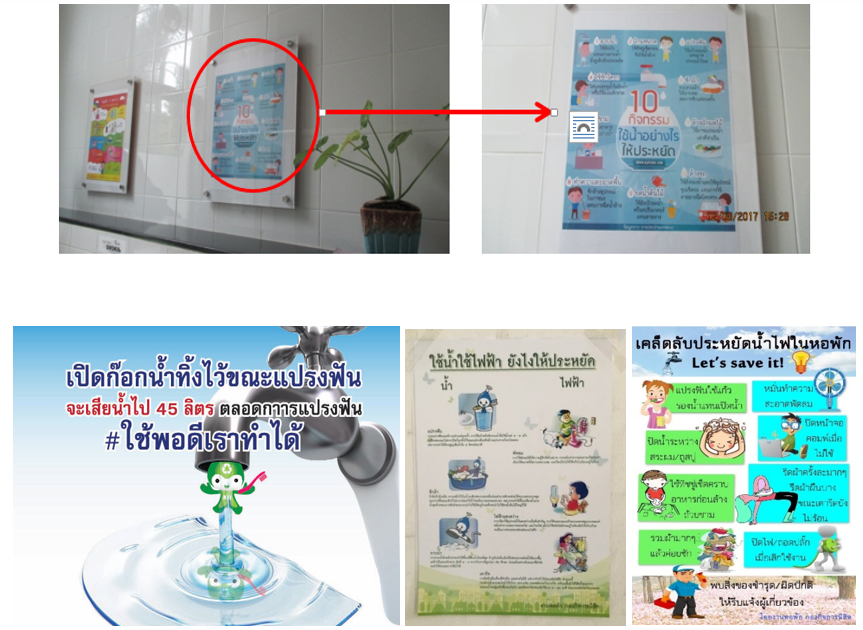
Kasetsart University has the policy to organize activities or projects to conserve energy, water using in the workplace, public relations within department and through the website)
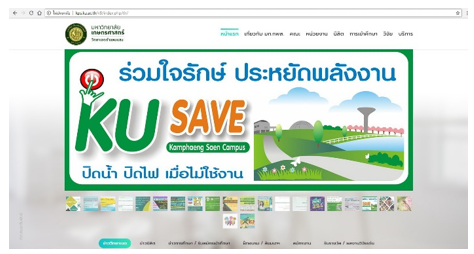
Public relations through the website of Kamphaeng Saen Campus
Energy-saving campaign / Sports Personnel Program for health
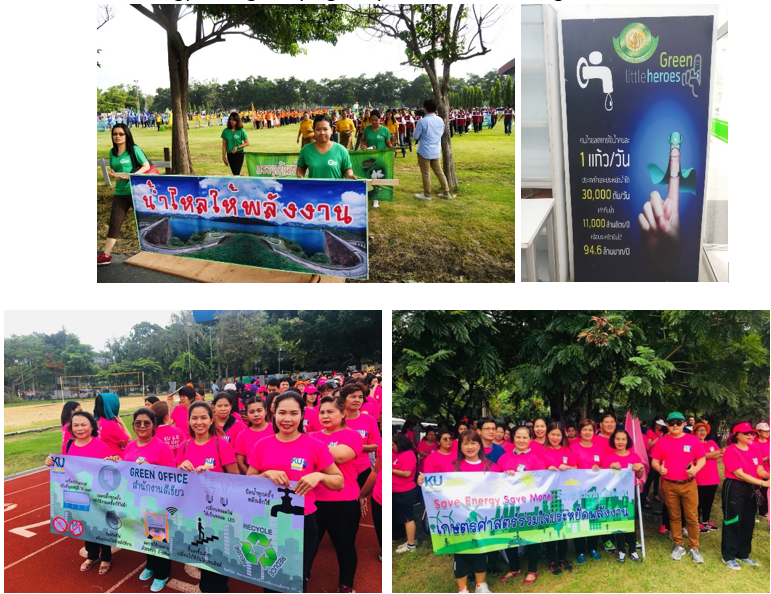
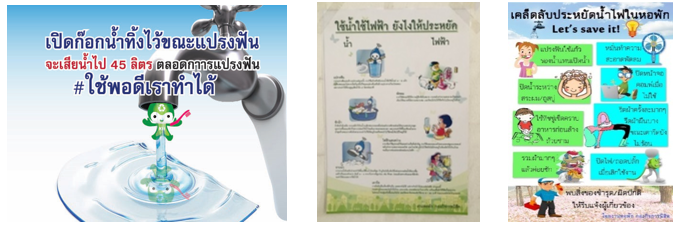
Water-saving campaign and toilet paper reduction program
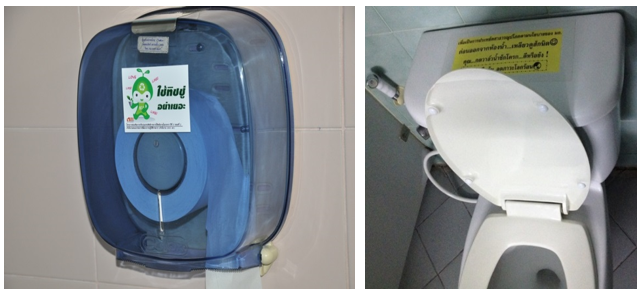
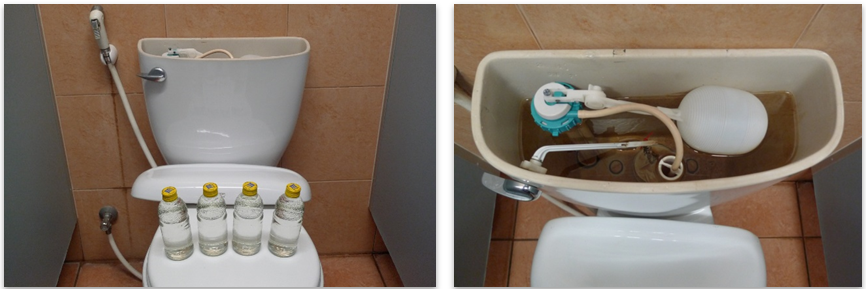
To reduce using water in toilet by filling water in 2 bottles water, placing the water bottles in the water tank at the back of the toilet. This method is not to obstruct the entrance of the water. Then close the rear tank lid. Try Pressing the toilet flush as usual. The water can be saved about 3 litres per each.
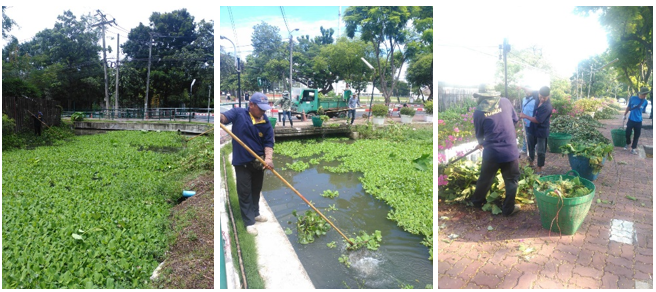
Water Management Project by controlling weed around the surrounding areas which helps tobalance the water conservation and doesn’t cause sewage in the canal and wastewater treatment.
Enzyme Ionic Plasma Policy for Wastewater Treatment within Kasetsart University
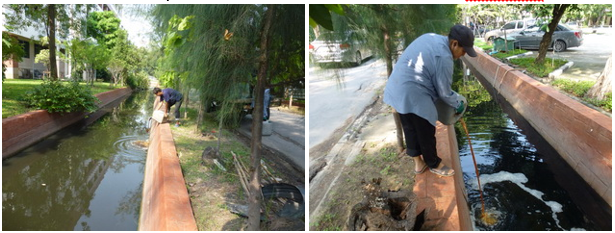
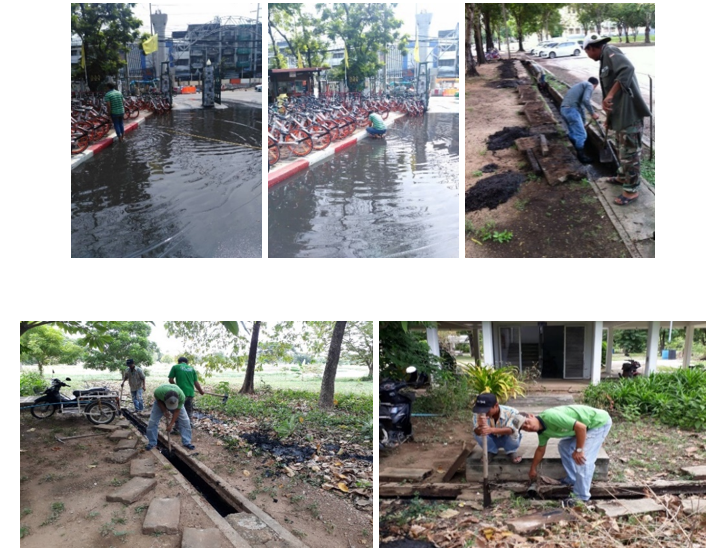
Water Management Project can solve drainage clogs, clean up pipes / canals, and improve a drainage system for flood management
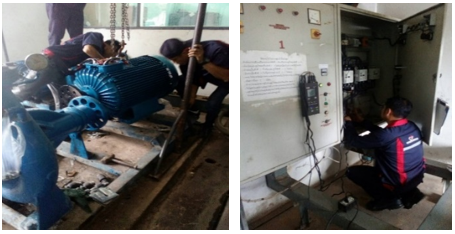
To check the 150-horsepower pump system for life long service and to prevent repairiug frequently. All pumps should have the records of the maintenance in using and timetables for a punctual monitoring and maintenance.
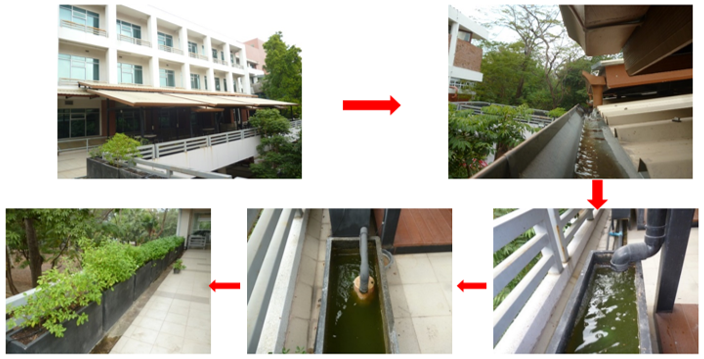
Collection of rainwater for watering vegetables in buildings ( Office of the Library)
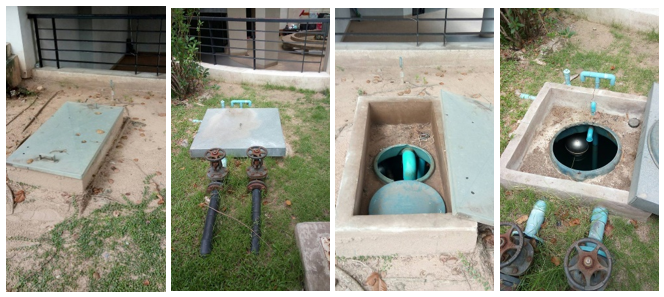
Underground water storage tanks
Ngamwongwan parking lot 2 is equipped with underground water storage tanks in order to prevent potential land subsidence with the space saving and stable water temperature.
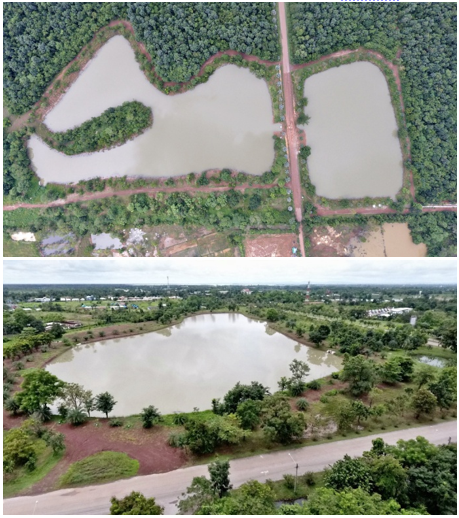
Building ponds / lakes for keeping water
Kasetsart University Kamphaengsaen Campus builds the 7 wells of ponds and lakes for keeping water to use. Wells in the area are approximately 416 rai. One well in 130 rai can produce for tap water of 48,000 cubic meters / year.
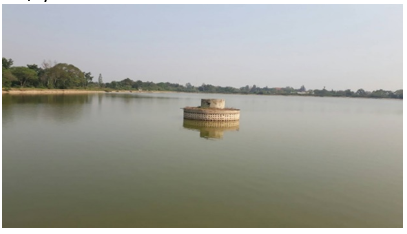
Well No. 1 in 150 rai can produce tap water of 48,000 cubic meters / year.
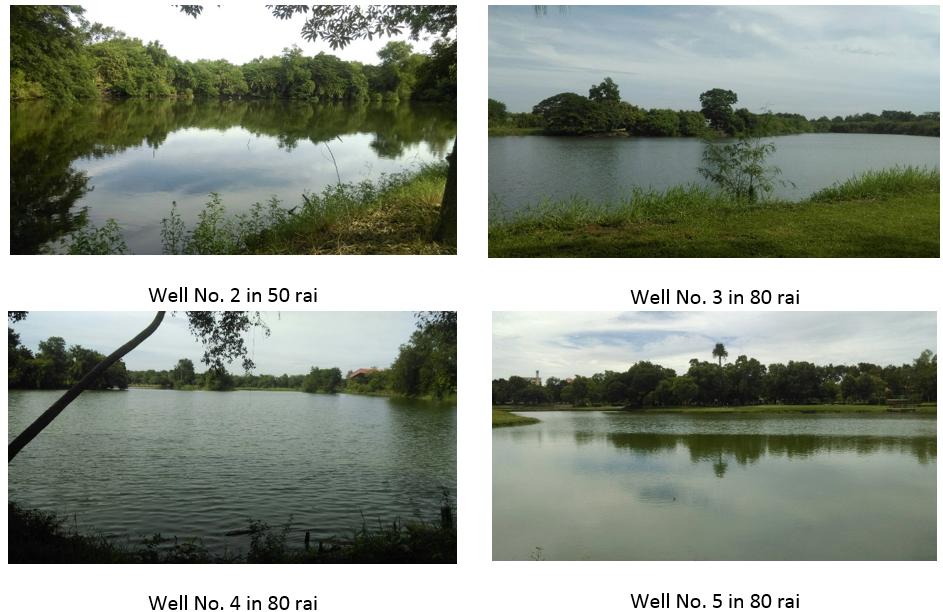
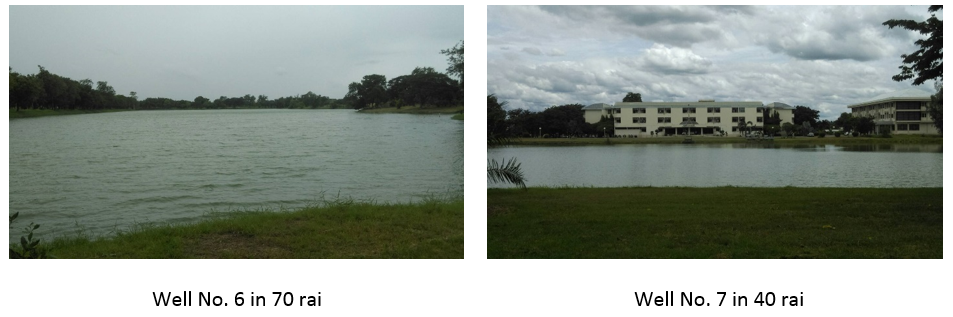
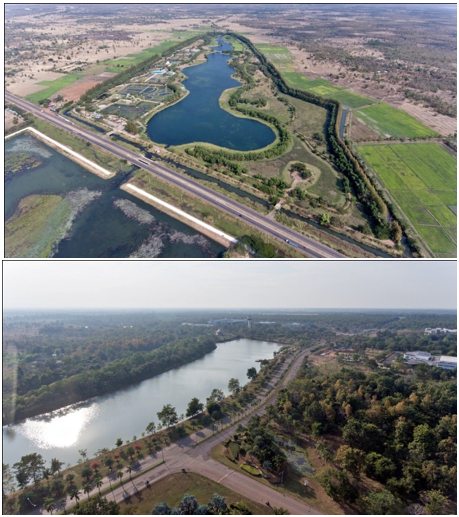
Kasetsart University Chalermphrakiat Sakon Nakhon Province Campus has 7 water reservoirs including Kalasin Reservoir, Nakhon Phanom Reservoir, Mukdahan Reservoir, Sakon Nakhon Reservoir, Nong Khai Reservoir and Udon Thani Reservoir. Total 1,400,000 cubic meters of water are collected from each reservoir for using in agricultural research areas .
Implementation of Water Recycling Program
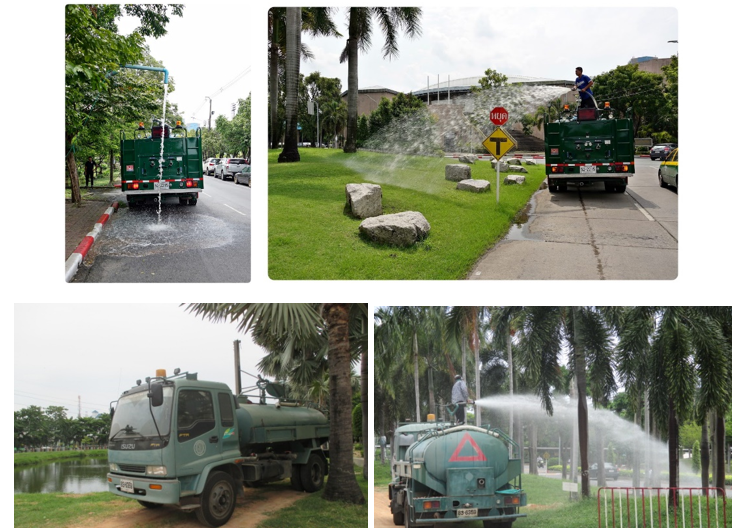
Recycling Waste Water from ponds, natural ponds for lawns and trees.
To install water pumps by using sprinklers within the wastewater treatment ponds for watering the lawn.
To use water from natural ponds, for watering trees to replace tap water
using of treated water in flushing toilets
To recycle Water of KU Dairy Center using for cleaning floors and flushing toilets.
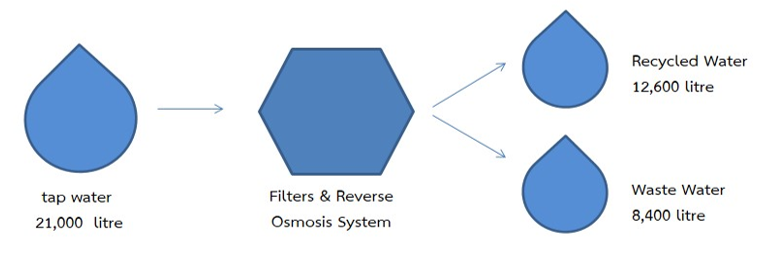
Reverse Osmosis
Soft drink production of Kasetsart University with Filters and Reverse Osmosis Systems
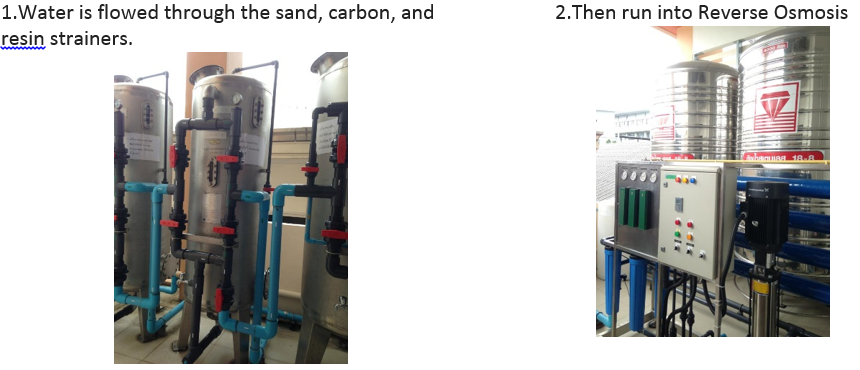
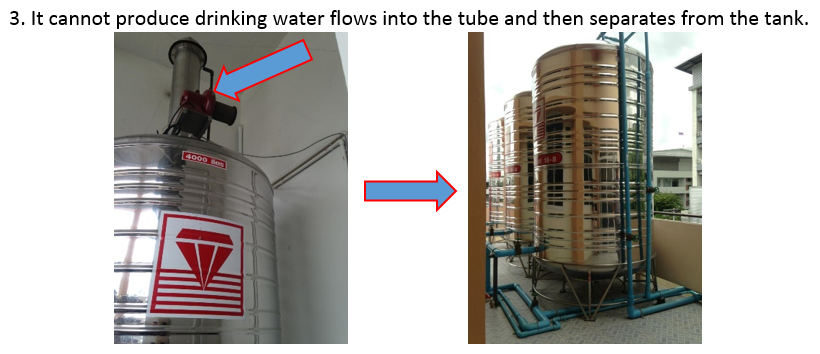
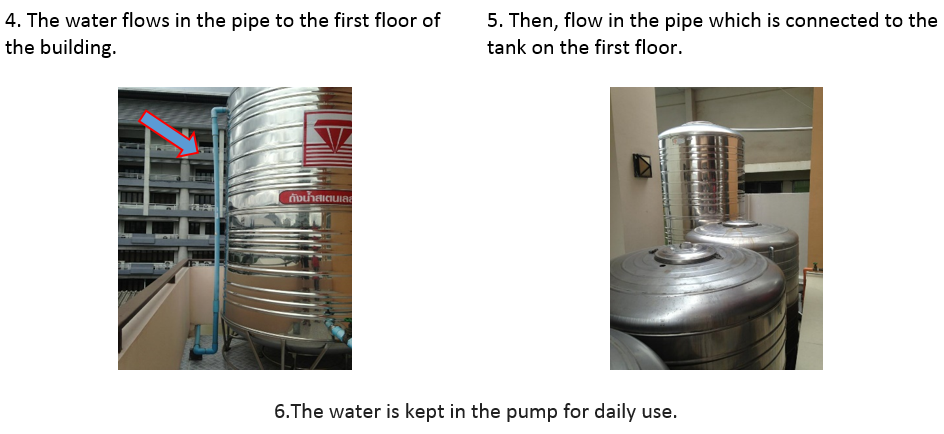
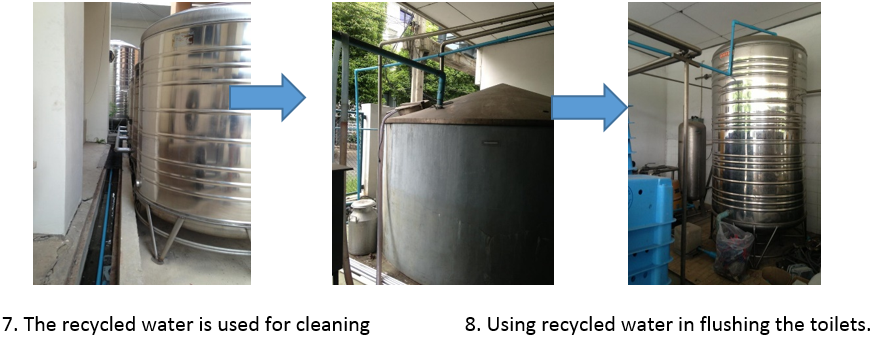
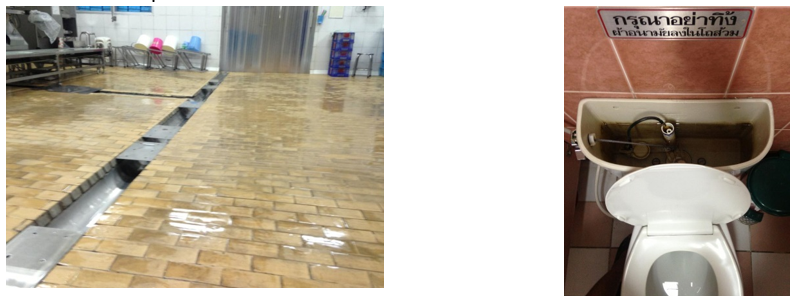
Water treatment plants
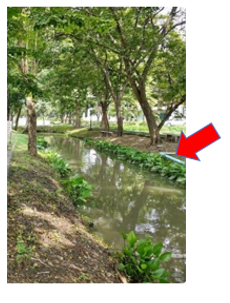
Water tank refill the treatment pond to recycle water
Using recycled water to the car wash.
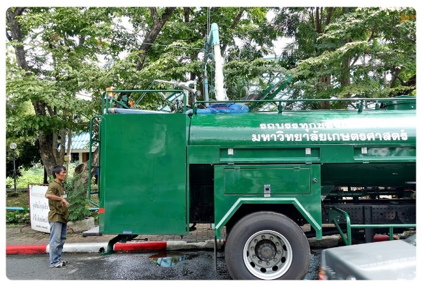
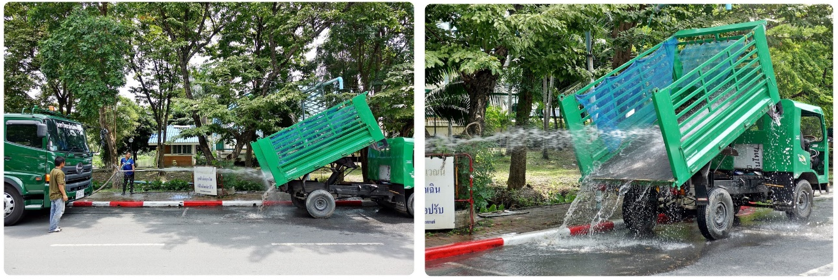
Using recycled water from the wastewater treatment plant to wash vehicles
Water Recycling System in Tilapia Hatchery
Water Recycling System in Tilapia Hatchery. The water is used to hatch the fish that is supplied with flowing water all the time. The water from the hatching tubes will flow into the support tray before flowing into the PVC pipe and circulating through the hose to return to the top of the hatching tubes. With this system of rotation can reduce the amount of water needed each day. The amount of water need to be added each day is about 2% of the total system water is about 20 liters.
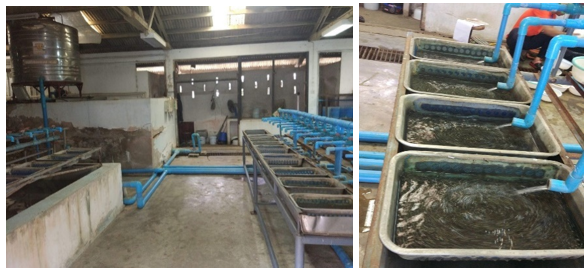
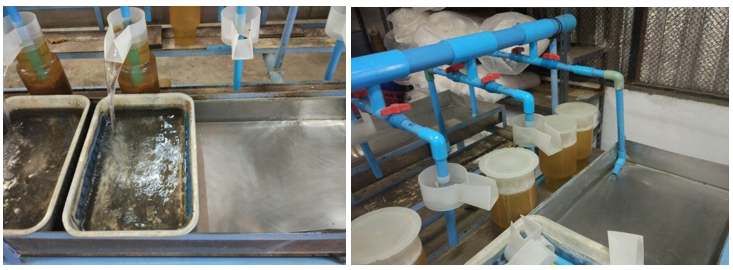
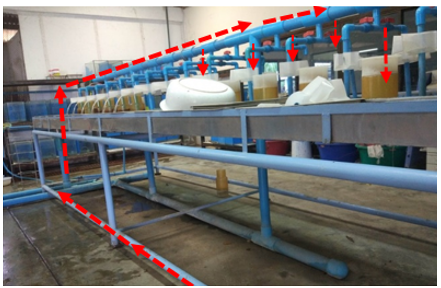
Water Flow direction
Power efficiency devices
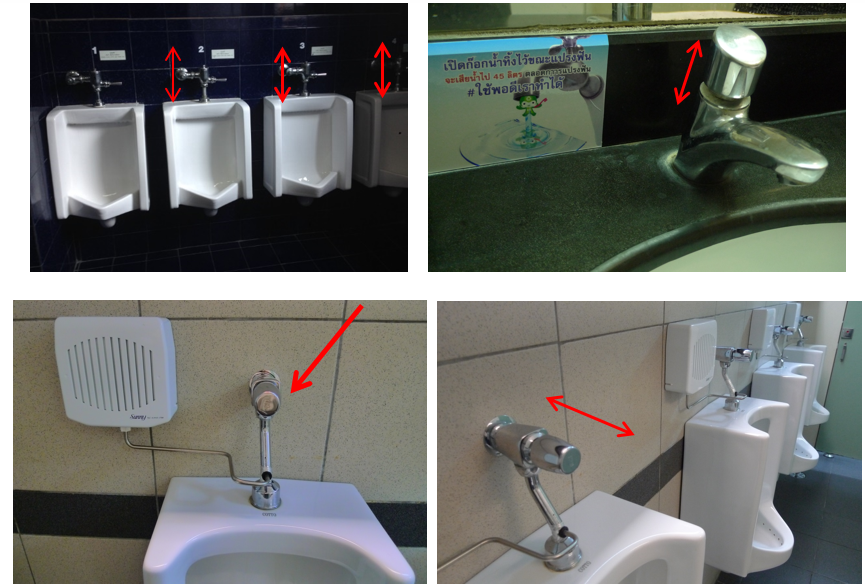
Kasetsart University uses electrical equipment efficiently, can reduce water consumption more than 75%.Kasetsart University has been using the electrical equipment efficiently which can reduce water consumption more than 75 percentIntroduction of sanitary wares can save a lot of water based on the principle of using water instead of old water to purify. This way use less water and wash quickly. The push button is located on the top of the water tank with two buttons, which can save up to 3 liters of water
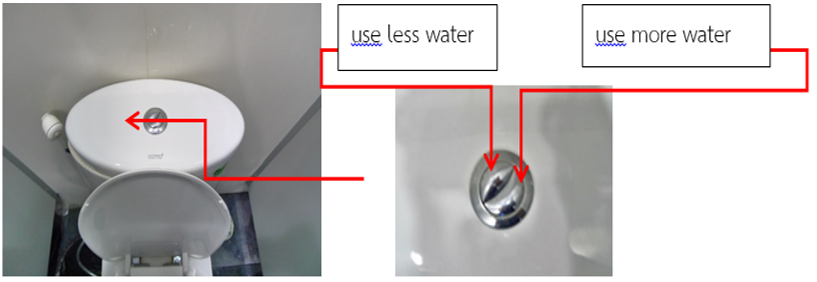
Introduction of automatic stop system for wash basins and toilet stalls for men by pressing the button when it is used. The water flow will stop automatically
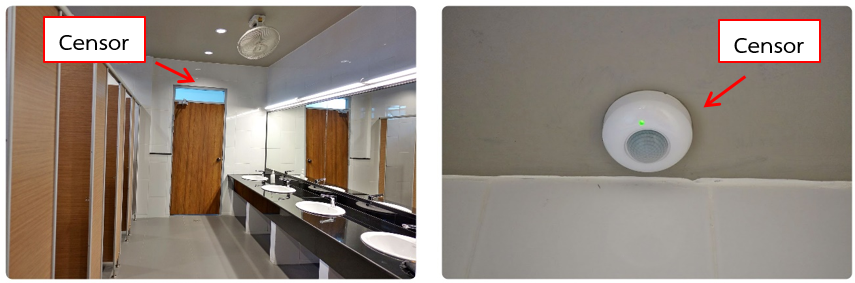
The sensor system can detect the on / off motion of the lights and the fans automatically
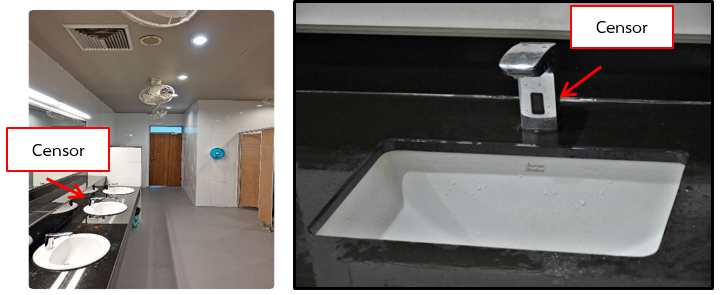
Sink sensor system, water will flow and stop automatically as soon as when the hands pull in/cut.
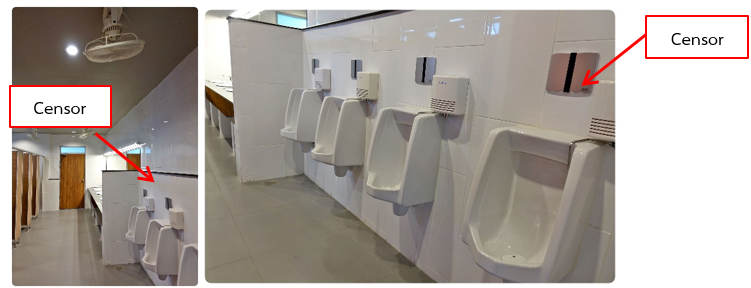
The sensor system of the men’s sanitary ware will run the water when standing, if the user leaves stands, the water will stop flowing immediately.
Water Supply Process, Kasetsart University
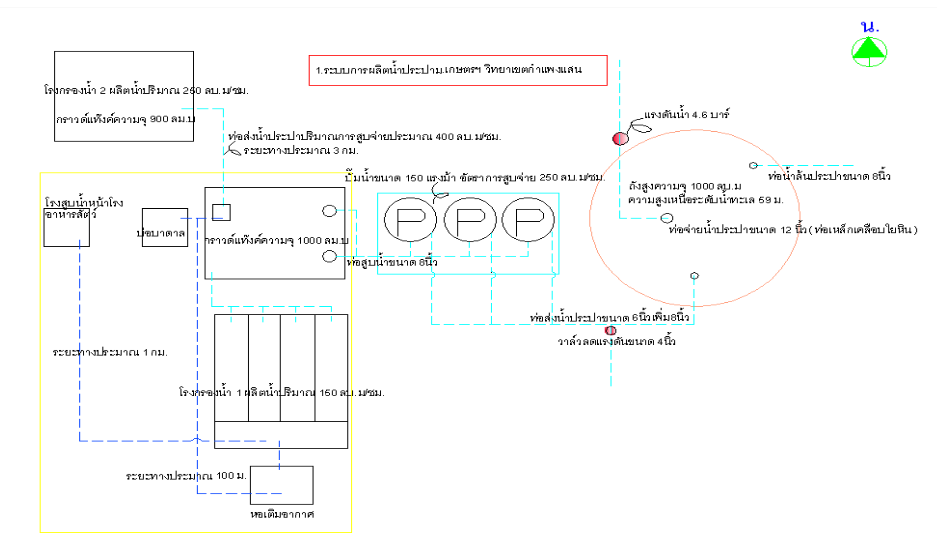
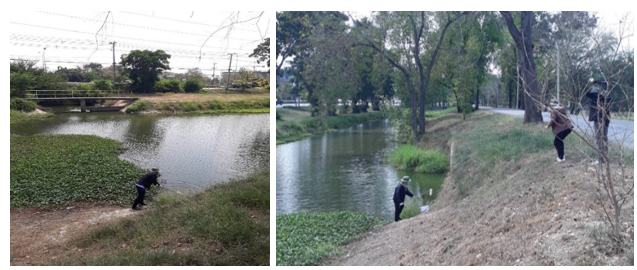
Water and Wastewater Measurement
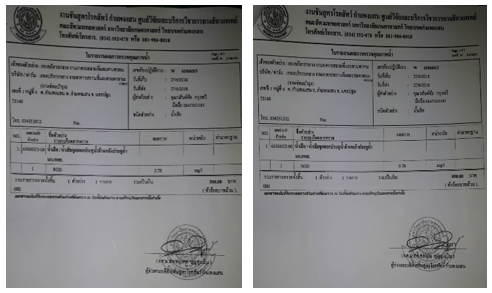
The result of the water that was measured before released outside Kamphaeng Saen Campus.
Waste (WS)
Toxic Waste Handled
Test procedures in laboratory produce many waste. Wastes from operation are risk factors that must be managed systematically. To prevent chemical spills and spread into the environment outside the laboratory by waste management as follows:
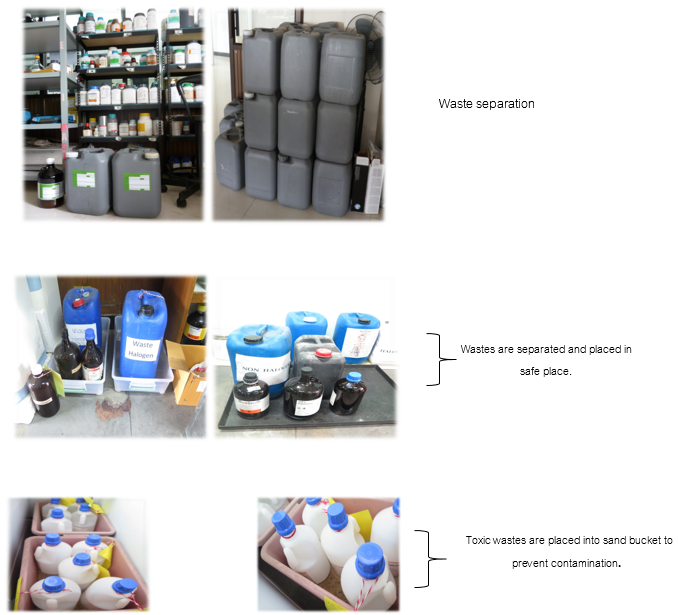
- Waste separation
- Collection and restore
- Treatment and elimination
1 Category of waste separation
Wastes from laboratory are easy to dispose, safer and cost of disposal reducing. There is no single waste disposal method suitable for all types of wastes. Therefore, categorization of waste makes it possible to choose the right way for disposal. The categorization should separate general, dangerous and not dangerous waste from each other. Two dangerous qualification of chemical substance should be considered as follows: firstly, prominent characters are flaming, explosion and oxidation. Secondly, inferior characters are toxicity, corrosive, infectious and radioactive. Chemical safety information should be studied from these two type of chemical substance characters.
Example of toxic waste categorization as follows: (Information from Kamphaeng Saen Campus)
Group 1 Solid waste 63,773.08 Kilograms/year
Group 2 Liquid waste 43,994.41 liters/year
Group 3 Radioactive and infectious waste 66,213.90 Kilograms/year
Group 4 Other non-specific waste 20.6 liters/year
Two type of wastes:
- General waste i.e. light bulb, battery and electronic appliances
- Dangerous waste (subjects from laboratory) i.e. solid type; test tubeand reagent bottle, liquid type; chemical and acid solution
2 Waste separation and stowage
It is advisable to separate and keep chemical waste in a waste storage room or specific cabinet in order to be safe. If a container leaks, it may causes severe reaction. A large quantity of toxic gas will cause a fire or explosion. Even if the containers are separated, some chemical waste should not place closely. In addition, compatibility of chemical solution also are considered. Here are some examples:
Process of toxic waste collection (Information from Kamphaeng Saen Campus)
- Chemical substances classification

- Chemical solution grouping
– In case of mixture, grouping by a type of substance that is most proportional.
– Heavy metal substance is on Group 4, regardless of the proportion of all substances.
– High toxic substance is in Group 5, regardless of the proportion of all substances and is on level 3 of health hazard criteria or above. Labeling is on a bottle as follows:
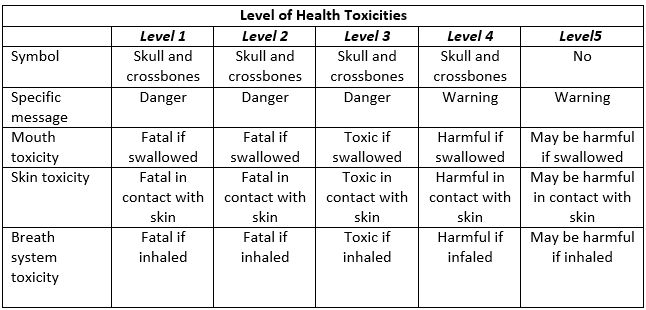
- In case unable to group, fills in a list of chemical solution inside a bottle. Volume is shown in percentage or ml. on a label and wait for grouping later.
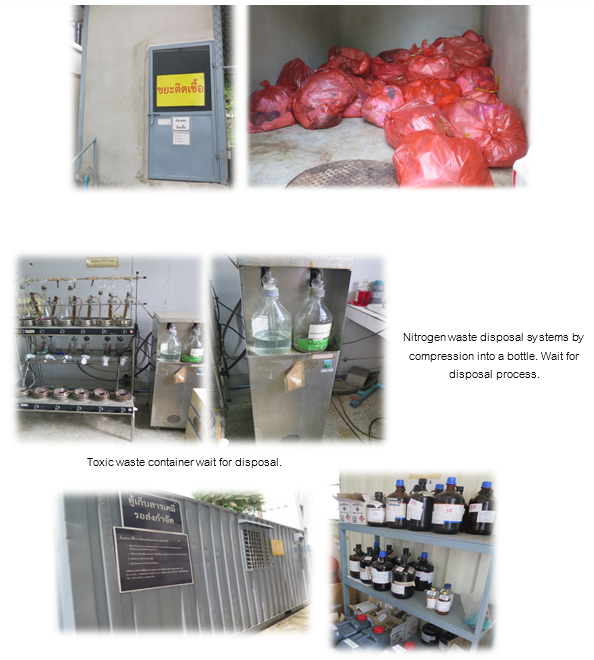
3 Waste treatment and disposal
Laboratory should have a preliminary management process before disposal as follows:
- Waste treatment before discard: least hazardous waste that can be disposed before released into sanitary system.
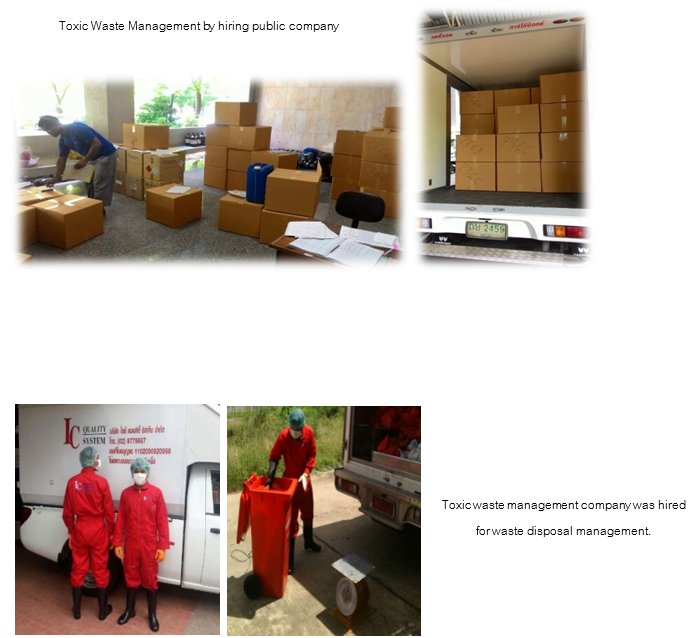
- Pre-treatment before disposal waste: hazardous wastes that cannot be eliminated by laboratory, will be treated before send to dispose by waste management company. To reduce danger of storage and transportation.
- Volume reducing before discard: laboratory has a management approach to pre-waste generation. To reduce the amount of wasted on destination. For example, using of non-dangerous chemicals replacing dangerous chemicals and/or reducing of chemical volume that make reaction.
- 4. Reducing of volume before disposal: reducing of disposal budget by decrease volume of waste before sending to waste management
- 3Rs of waste management as follows:
– Reuse : recycling of waste by cleaning and maintenance without changing form of waste.
– Recovery : changing form of waste by detachment, separation and transform process and bring to use again, without original purpose.
– Recycle : reusing of material by transform process. It has different physical and functional but chemical composition as it was.
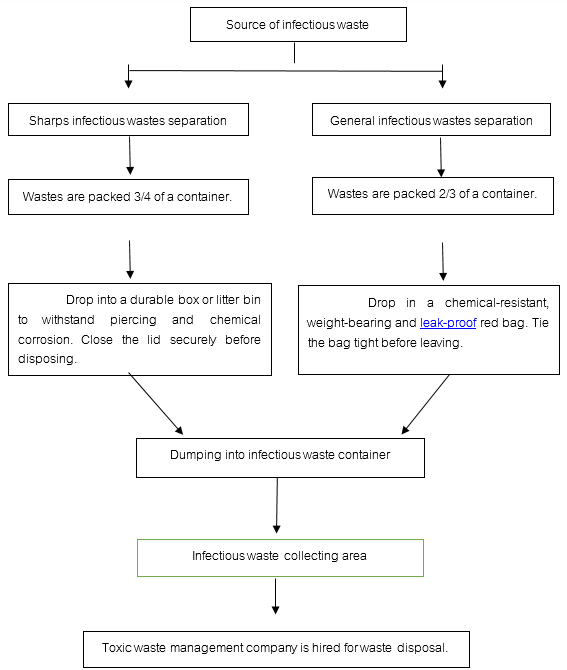
Flowchart of Biohazard Waste Disposal
Greenhouse gas emission reduction program
Indicator 1 Direct purpose of reduction of greenhouse gas emission
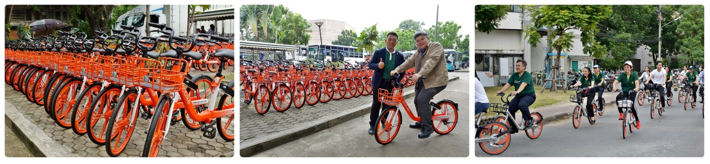
1.1 A policy on electrical vehicle shuttle service instead of diesel combustion engine vehicle in order to reduce greenhouse gas emission

1.2 Promote the use of zero greenhouse gas emission vehicle
1.3 Non-CFC air conditioner’s refrigerant usage
Maintenance of air conditioner for reduction of greenhouse gas emission and energy saving. There are steps of air conditioner checking as follows: air conditioner’s refrigerant checking, high and low pressure checking and keeps the pressures in the standard level, and measure for electrical power consumption of air conditioners by checking of electrical current of compressor.
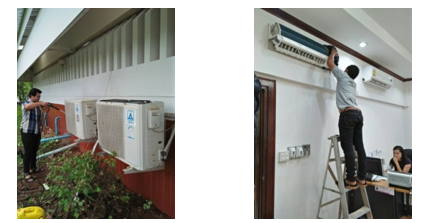
Figure Cleaning air conditioner to reduce energy consumption
Using of R-123 or HCFC-123 refrigerant
The R-123 or HCFC-123 refrigerant is a kind of Hydrochlorofluorocarbon (HCFC). It is low ozone depletion potential (ODP). R-123 has 0.012 or 1.2% ODP of R-11(CFC-11). It means that R-123 has lowest rate of ODP out of all HCFC. (Fig. 1- and 2)
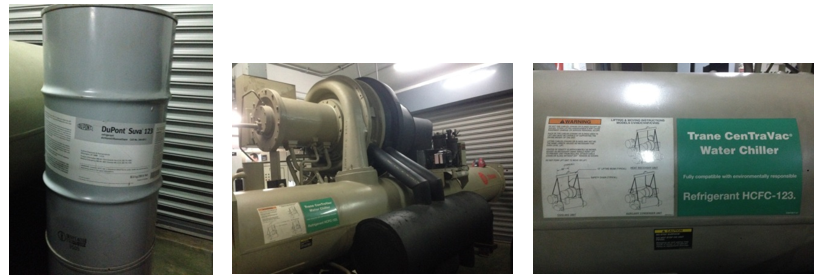
Figure 1 Non-CFC refrigerant, HCFC – 123 liquid refrigerant

Figure 2 Cooling system which save more water
Indicator 2 Indirect purpose of reduction of energy emission
2.1 Explicit policy on energy management
The use of efficient energy saving appliances replacing conventional appliances (Figure 1)
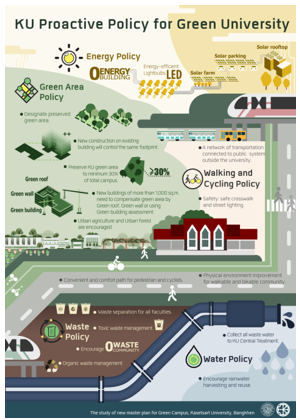
Figure 1 Proactive policy of approach on Green University
2.2 Campaign on energy saving for reducing of electricity consumption
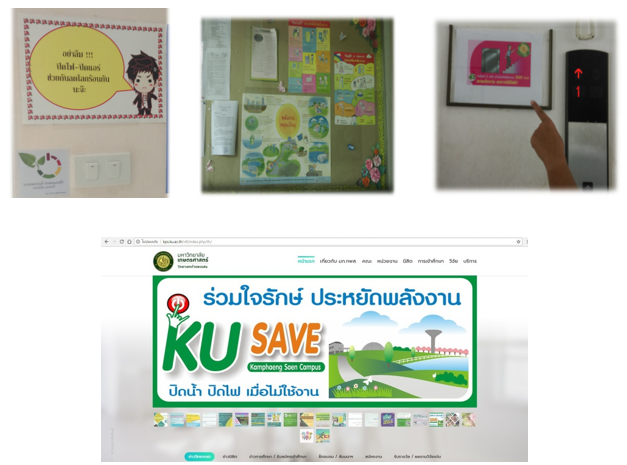
Figure 2 Sticker campaign on switch off the light when not in use, It is electrical energy- saving and reduce greenhouse gas emission.
2.3 Encouragement on renewable energy consumption
Biogas production station
Biogas production station of Kasetsart University produced gas from food waste 400 kg. /day and converted into heat energy from a gas tank of 15 cubic meters to use in the canteen.
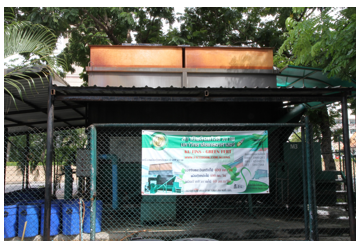
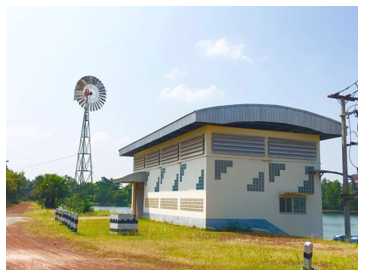
Usage of wind power
Solar Cell Panels 9 Kilowatts.

Indicator 3 Other indirect purpose of reduction of greenhouse gas emission from all activities of the University
3.1 Various form of waste management such as recycle and fertilizer production
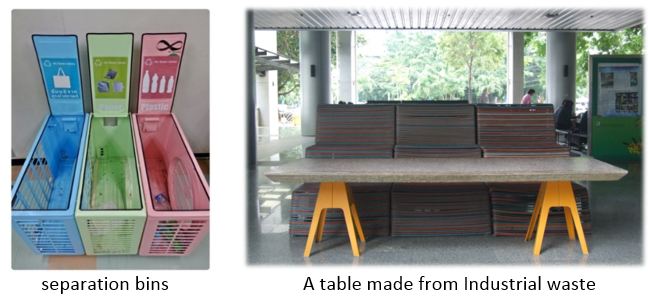
Kasetsart University has organized activities or projects to change a habit of carelessly consume materials or resources. The purposes of the activities or projects are to reduce energy consumption and create environmental friendly behavior of student and staff. These activities will be least cost or free of charge. In addition, Kasetsart University has also pushed ‘the Zero Waste Society’ program to reuse waste or leftover material by these following policies:
Avoid: avoid using of material which difficult to eliminate.
Reduce: reduce purchasing or using material which cause waste.
Reuse: bring back used material or thing to be used again.
Recycle: processing or transformed leftover material and use again.
3.2 Water purchasing reduction such as self-production of tap water and campaign on water saving
Kasetsart University has a policy to organize activities or projects to conserve energy, water use in the workplace, public relations within department and through the website
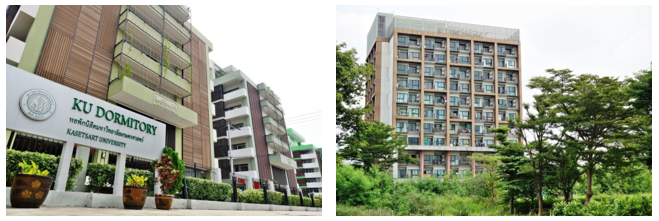
3.3 Adequate nearby accommodation for student and staff in order to reduce commuting
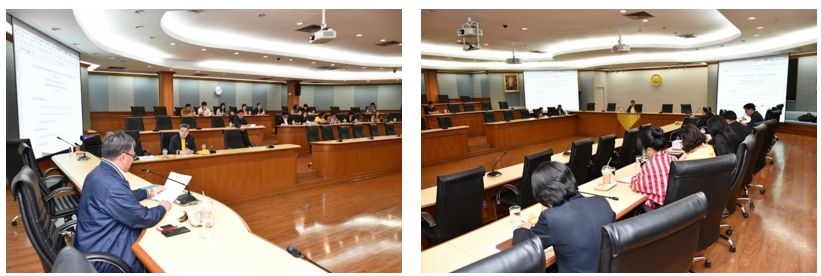
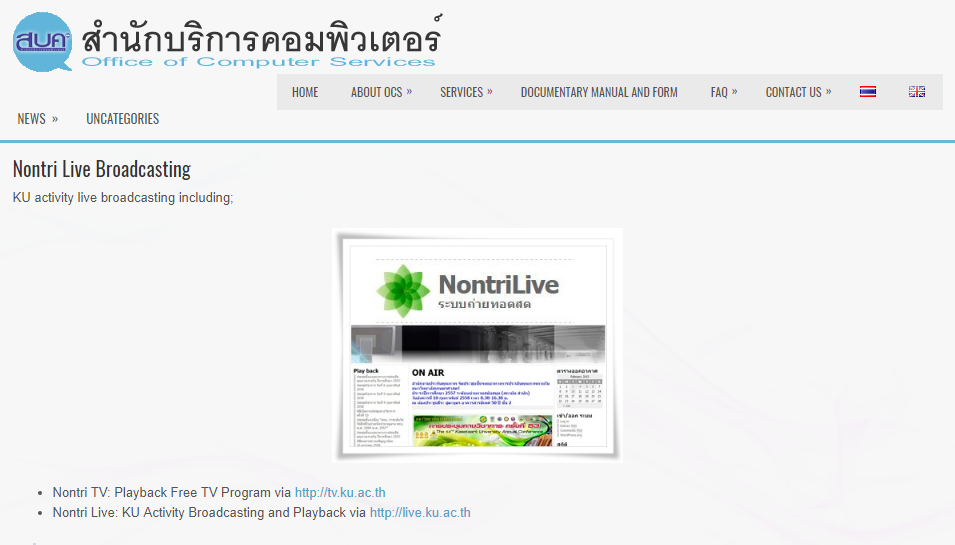
3.4 Reduction of air travel by teleconference between the 4 campuses
(Kasetsart University Forests)
Kasetsart University Forests plays an important role in the production of research. student Internship and academic services to the society as well as providing the ecosystem service for students, staff and visitors, as the source of greenhouse gases, water sources, conservation of plants and animals, etc. For the economy and society, it is the food banks, and the hiring place of local workers for distributing of the ecotourism to the community.

Kasetsart University Forest plays an important role as a recreation area and a source of carbon dioxide. Kasetsart University Forest at Chalermphrakiat Sakon Nakhon Province Campus is a community food bank for people to collect forest products.
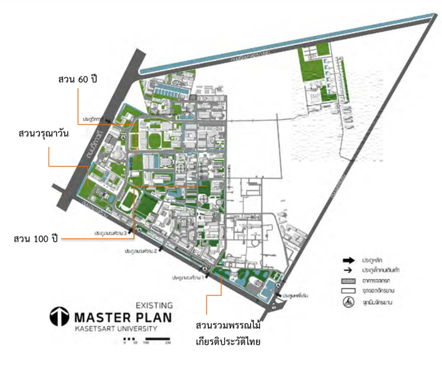
1. Kasetsart University Bangkhen Campus with total area of forest 22.37 rai, absorbs carbon dioxide of 21.25 tons per year.
1) Varunawan Park, 6 rai, absorbs 5.7 tons of carbon dioxide per year.
2) Thai Commemorative Garden, 4.6 rai, absorbs carbon dioxide absorbed 4.37 tons per year.
3) 100 years garden of Luang Suwan Vajokkasikij, 5.25 rai, absorbs carbon dioxide 4.99 tons per year
4) 60-year garden, 6.52 rai, absorbs 6.19 tons of carbon dioxide per year.
2. Kasetsart University Kamphaeng Saen Campus
His Majesty the King’s 80th Birthday Anniversary Park, the area of 131 rai absorbs 124.45 tons of carbon dioxide per year.
3. Kasetsart University Chalermphrakiat Sakon Nakhon Province Campus
H.M. Queen Sirikit’s 86th Birthday Anniversary Natural Park and Dipterocarp Forest with the area of 931 rai including of variety of species of the plants such as dipterocarp forest, Shorea siamensis Miq., Shorea obtuse Wall., Terminalia alata Heyne ex Roth., Buchanania latifolia Roxb., Aporusa avillosa Baill., Xylia xylocarpa (Roxb.) Taub. , absorbs 884.45 tons of carbon dioxide per year.
4. Kasetsart University Sriracha Campus
Khao Nam Sap, 340 rai of a dry evergreen forest with notable species include โมกมัน Wrightia tomentosa Roem., Lagerstroemia floribunda Jack., Nephelium hypoleucum Kurz, absorbs 323 tons of carbon dioxide per year.
The Office of the President, the Office of the University Library and VGREEN, Faculty of Environment received “Carbon Neutral Man” and “Carbon Neutral” awards from Thailand Greenhouse Gas Management Organization (Public Organization) under the Ministry of Natural Resources and Environment Control
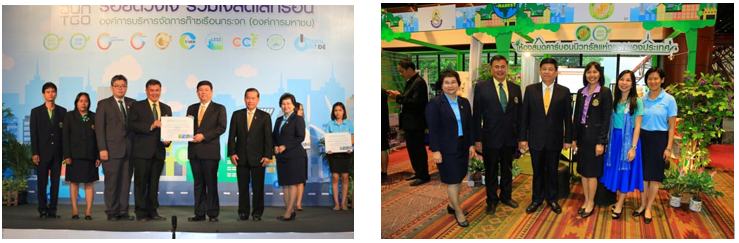
The Office of the University Library, KU was the very first carbon neutral library of Thailand.
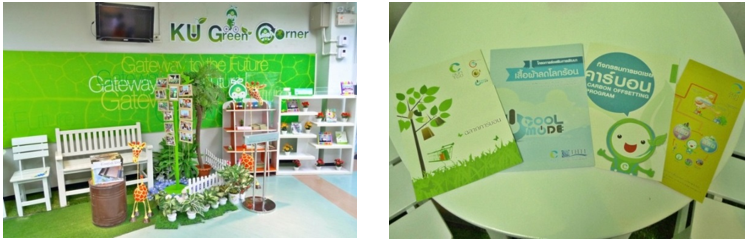
Carbon footprint corner at the Office of the university library
KU Econ Green Campus
Kasetsart University is the first certified Thai university by Thailand Greenhouse Gas Management Organization (Public Organization), under the Thailand Voluntary Emission Reduction Program in forestry and green area category.
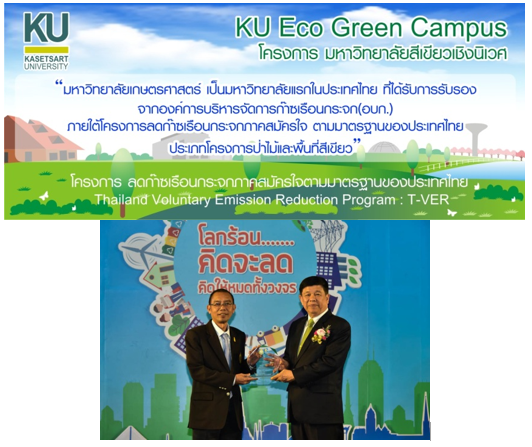
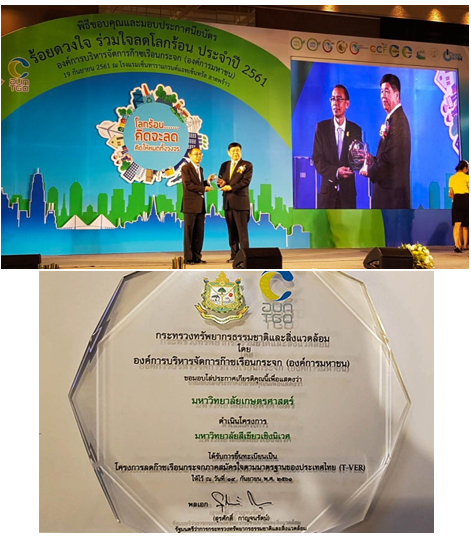
Thailand Greenhouse Gas Management Organization (Public Organization) organized an event on “Hundreds of Hearts to Reduce Global Warming” on 19 September 2018 at Vibhavadee Ballroom, Centara grand at Central Plaza Ladprao Bangkok. In this regards, H.E. General Surasak Kanchanarat, Minister of Natural Resources and Environment of Thailand presented a Plaque to Assoc. Prof. Dr. Trin Saengsuwan, Vice President for Kamphaeng Saen Campus for his achievement on KU Eco Green Campus project.
The project is registered as one of Thailand Voluntary Emission Reduction Program or T-VER. Owing to Kamphaeng Saen Campus separated area of 235.77 rai within the campus into 3 zones for difference purposes as follows: Zone 1 – 100 rai of forest area Zone 2 – forest area Zone 3 –Yangna tree ( Dipterocarpus alatus Roxb.) planting area

What is T-VER?
Thailand Voluntary Emission Reduction Program or T-VER was developed by Thailand Greenhouse Gas Management Organization (Public Organization) or TGO. The purpose is to promote and support all sectors to engage in greenhouse gas reduction voluntarily in order that the carbon credits obtained from the program can be trade. Credits obtained from the program are mainly used for CSR purposes and voluntary carbon offsets of organization and companies in Thailand. The TGO has defined rules and methodology to register and certify for the program that must be contributes to reducing / absorbing greenhouse gases in Thailand.