Energy And Climate Change


2.8.1

Cover and certificate disinfection measure with “Hot Air Oven for Sanitizing Equipment and UV Light Oven”
At Kasetsart University Graduation Ceremony, safety was put first, so measures were taken to enhance the safety of the certificate at the graduation ceremony by sterilizing the cover and degree certificate with the ‘Hot Air Oven for Sanitizing Equipment and UV Light Oven’, which was supported by the Research and Development Institute of Kasetsart University.
Sterilization heat dryers are research and development by Asst. Prof. Dr. Khunyut Iamsaard, Department of Mechanical Engineering, Faculty of Engineering and Assoc. Prof. Dr. Varataya Thamkittiphop Department of Vocational Education, the Faculty of Education, Kasetsart University, and has registered a patent for an electric heating device. The highlight is that it has a high capacity but is still able to dissipate heat quickly and evenly.
Disinfection is carried out in a room where spraying is disinfected and bacteria are detected by spread plate technique and double-check for the absence of microorganisms and bacteria in accordance with scientific principles, which is carried out with care and prudence, which improves the cleanliness of the cover and certificate, as well as in accordance with the safety and hygiene measures of the graduates and related parties.
From the measures to enhance safety with sterilization dryers and UV dryers at the KU graduation ceremony, it is manifest and builds confidence and is accepted in society.
2.8.2

Energy Saving Sun Panels Prevent Straight Radiation (100%)
An Energy Saving Solar Screen
Research on invention innovation by Assoc. Prof. Dr. Sopha Wisitsak and Dr. Natari Sridarayanon, Research Unit, Department of Building Innovation, Faculty of Architecture, Kasetsart University. It has developed the use of natural light in buildings that do not cause problems. In order to obtain good quality natural light into the interior of the building, it is a creative application of theory and design, together with the calculation of the angle of the sun’s rays corresponding to the direction of the sun’s orbit (resulting in an effective shape to prevent straight rays throughout the year (100%), without the need for mechanical equipment to adjust the sunscreen angle, and with openings where the outside view can be seen at all times. Connect with the outside environment and help foster a positive indoor environment.
Utilization
Sunscreen panels are used to assemble glass, doors, windows, open spaces, or as walls for open spaces such as balconies, terraces, or other areas for sun protection, as well as to replace wrought iron for protection against intrusion. Therefore, it can be applied to a wide variety of buildings and design a variety of beautiful patterns, patterns, colors according to your needs.
Features and characteristics
– It can protect 100% of the sun throughout the year (reduce glare, heat and UV rays.)
– Good quality of light (uniform, soft on the eyes, helping to maintain the health of the eyes and skin of building users)
– Reduce the deterioration of materials, furniture and artwork inside the building.
– Saves energy.
– Convenient for use and maintenance.
– Invention patents from the United States, Japan, and the People’s Republic of China.
– Product design patent from Thailand.
– Thailand Invention Innovation Contest Award (National Research Council) International Contests in the Republic of Korea.
2.8.3

KU Trash Sweeper V3 jet floating garbage collection vessel (Innovation for the Environment).
Asst. Prof. Dr. Sucheela Polrueng, Head of Research Team, Department of Environmental Engineering, Faculty of Engineering, Kasetsart University, and a team of researchers, jointly created a portfolio of waste collection in water bodies both in fresh water flowing into the sea and in the sea. KU Trash Sweeper V3 jets are remotely controlled to reduce the problem of manual labor to collect garbage outdoors and in the sun for long periods of time that can affect health, and also to reduce waste problems that directly affect seafood-related industries and marine and coastal tourism industries, which are among the main industries driving the Thai economy.
KU Trash Sweeper V3 is a jet that uses battery-powered energy in combination with solar cells, designed to be environmentally friendly and not to release pollution to water bodies while in use. Batteries are used to store electricity by charging electricity from houses, solar panels and electric charging systems in cars, collecting garbage from several meters deep to beaches that are only 0.2 meters deep and carrying up to 27 kilograms of garbage.
2.8.4

Electric tourist boats
Electric boats for transport and water tourism to replace motorized, reduce costs, save energy, and be environmentally friendly, as well as to enhance the domestic public water transport system, according to research by Associate Professor Dr. Yodchai Tiaple, Faculty of International Commerce Kasetsart University Sriracha Campus.
‘Electric Tourist Boat Research and Development Project’ with the support of research budget from the Electricity Generating Authority of Thailand (EGAT) is the design and development of electric boats for water tourism in rivers, canals and dams by researching from the design of boats, including sails and various propulsion systems, to find the most efficient model and to test the performance of electric boats for high-efficiency water traffic, reducing pollution both by air and sound by conducting performance tests at Srinakarin Dam, Electricity Generating Authority of Thailand, Kanchanaburi Province.
Highlights of utilization
(1) Payload 10-15 seats.
(2) The prototype electric boat has an average noise level of 65 dB, lower than the standard noise level of 75 dB.
(3) Compared the environmental impact between passenger electric boats and passenger engine boats and electric tourist boats, which can last more than 3 hours and the distance exceeds 30 kilometers per charge. The speed of the prototype electric tourist boat has a suitable speed in the range of 8-10 km/h, which is in the energy saving range.
(4) It operates 10 kilometers per day around Moo Pa Island twice a day with a reduction in oil consumption and carbon reduction of 28 percent.
2.8.5

Lighting channel sets and sunscreen equipment for residential buildings.
Energy-saving light channel set – Sunscreen device provides roof ‘Technology helps the house cool down by 3-4 degrees Celsius, prevents UV rays from accumulating in the house from the application of the advantage of the sun’s orbital direction in a different perspective from the former. However, residents often face glare and UV heat, which has become a research project at Kasetsart University to solve both the problem of unfit lighting and costly foreign technology.
Buildings often encounter problems with insufficient lighting inside the building. Some people choose to brighten up with translucent tiles, but they can’t control the glare that makes them uncomfortable and accumulate heat inside the building. As a result, more air conditioners need to be turned on, as well as UV rays that come with light that not only affect the skin but also affect furniture and other accessories, thus creating a new aperture shape design, taking advantage of indirect light, together with information on the direction of movement of the sun.
The project ‘A set of light channels and sunscreen devices for roofs with natural ventilation’ was created by studying the theory of light travel and calculating the angle to see where Thailand is located in the world, as well as designing the shape of the aperture with 3 parts: opaque, transparent and ventilated, the opaque part being located in a corner that is 100% directly protected from the sun and uv protection throughout the year. While the translucent part is located at an angle that can receive indirect light, it is a level of brightness that is comfortable to the eye, is consistent and allows building users to see the sky. The ventilation part is located on the lower edge of the grille, which is suitable for airflow. The aperture shape is curved, helping to push hot air from inside the building out into an angle that won’t bounce back into the building. At the same time, it also helps to blow away the dust that settles in the translucent part.
Highlights of the lighting and sunscreen kits for residential buildings are as follows:
- Energy saving, electricity and air conditioning system.
- Environmental friendliness promotes good health inside the building.
- Be open only to the light of the sun.
- No heat rays enter the building.
- Easy to manufacture, use domestic equipment, make it low cost.
2.8.6

Prefabricated air vents for building roofs.
Opening the roof light channel to receive natural light saves the cost of electricity, lighting. The most popular method nowadays is to install transparent or translucent materials to receive direct sunlight or sun rays, which have very high energy, causing problems with bright light, heat, and UV rays that negatively affect the health of the eyes, causing the furniture materials to deteriorate quickly, and wasting the energy of the air conditioner.
‘Prefabricated vent light channels’ were developed to solve such problems. The parts are designed to avoid exposure to straight sun rays. It uses the principle of refraction and reflection of light, coupled with the opening of channels for ventilation by natural means, to increase the efficiency of reducing heat and good indoor ventilation.
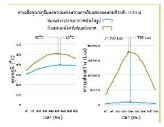
The result of comparing the finished vent light channels with fiberglass roofing sheets in the closed test box.
Based on the prototype comparison test, the finished vent light channels with fiberglass roofing sheets in the test box are closed (at the level of 0.80 m). It was found that the prototype of the finished vent light channels. It has better indoor lighting consistency, with an average luminosity value (798 CIE Lux) close to the indoor luminosity standard (200-750 Lux), and an average of 10 °C lower internal temperatures than test boxes equipped with fiberglass roofing sheets.
2.8.7

The production and use of charcoal and high-quality wood vinegar from biomass to enhance the quality and safety of grilled and smoked meat products.
The cancer mortality rate among Thais is increasing every year as Thais prefer grilled food, which can be caused by the use of low-quality charcoal that contaminates the food with PAHs, which, if eaten regularly, may increase the risk of developing cancer.
The production technology of ‘high-quality charcoal’ reduces PAHs contamination in grilled food. It has the potential to be used in the food business/industry.
Wood charcoal produced from Iwate stoves is of high quality. When used for meat grilling, PAH can be reduced by up to 75% compared to wood charcoal used in traditional manufacturing methods.
Secondary products are charcoal powders that can be used to produce charcoal briquette, which is currently in great demand in the market. The charcoal rods and briquettes produced from Iwata furnaces are more durable than conventional commercial charcoal, heated for longer periods of time.
The addition of wood vinegar to add a smoked aroma to meat products is acceptable to consumers as smoking and can reduce rancidity and reduce microbial growth in cooked pork during storage at refrigerator temperatures.
2.8.8
 Safe Vegetable Growing Kit Energy Saving System.
Grow vegetables hydroponics, get fresh vegetables that are clean, hygienic, safe from toxins to eat in the household, automatic operation system, use solar energy, no electricity costs, easy to move.
The drought crisis situation has greatly affected agriculture in Thailand. Farmers cannot grow crops, or damage crops they have planted. These issues are the ones that the government and related agencies must support in developing water resources and water use technologies so that they can have adequate water use throughout the year so that farmers can livelihood to improve the quality of life and advance the country’s agriculture. Therefore, living with the appreciation of resources is a solution to sustainable agricultural and well-being problems.
Mr. Saran Hongsakornprasert Agricultural Scholars, Career Research and Development Stations for Farmers The Faculty of Agriculture, Kasetsart University, has created a set of prototypes for safe vegetable growing and energy-saving systems by combining agricultural knowledge and theoretically correct technologies to achieve efficient use of resources and obtain healthy vegetables for consumption at the household level.
The production process of safe vegetable growing kit energy saving system is an automated system that uses energy from solar panels through an electric power control system to direct the pump to suck the nutrient solution up to the vegetable growing trough and then circulate it back to the nutrient solution tank.
Highlights/Features of the Vegetable Growing Kit Health Energy Saving System
– The planting can be moved to different areas as needed conveniently.
– The system is automated, solar powered, no electricity costs, suitable for those who do not have time but want to consume clean and safe vegetables.
– Suitable for growing vegetables in the kitchen garden according to the hydroponic method for eating on its own in the household.
2.8.9
 Innovative Solar Hydro Vegetable Growing Kits
Solar cells are devices for converting light energy into electrical energy by using semiconductors such as silicon through scientific processes to generate DC electricity. Nowadays, solar cells have developed to be highly efficient and have different colors for aesthetic purposes such as blue, green, red and gold.
Growing plants without soil, the plant is given the nutrient solution necessary for the plant in a form that can be applied immediately. Because there’s a Adjust the EC and pH values to levels suitable for the plant at all times of utilization.
Highlights/Features of solar hydro growing kits
- Use natural renewable energy.
- The area has no electricity; it can be used.
- Save fertilizer because it is a renewable fertilizer system.
- Easy production control.
- Reduce labor costs.
- There are many kinds of planting materials that can grow plants.
2.8.10
 Seaplane designed and researched by a team of professors. Kasetsart University, Sriracha and Navy Thai Navy
At the wind tunnel, the Aeronautical Engineering building, a test on of an air-cushioned landing craft, also known as a seaplane was conducted. The seaplane was developed by Dr. Rattapol Sakornsin, Sriracha Faculty of Engineering, conducting experiments with professors of aeronautical engineering, Kasetsart University.
Asst. Prof. Dr. Kittipong Yaovaja from the Department of Mechanical Engineering, who is in the Flight Research Group, contributed to the programming of the experiment and collected various data of the test, namely, 16 air pressure points, the torque values generated on all three axes, combined with the position control of the aircraft model and the control of the position of the simulated slab.
The aircraft test program in the wind tunnel, written by the raas research group team, Kasetsart University (Sriracha), is divided into aircraft position control system, using a simulated floor control notebook, using the right notebook to receive wifi images, the other on the left as the receiver of all values, to save them in the LabVIEW database, to write simulated ground control, to be able to adjust the level of 0.1 mm to be sufficient for testing for small seaplane models. It has a cross-sectional area of 1 square meter.
In the control room, it controls the operation of the wind tunnel, which is characterized by a closed wind tunnel by turning on and off a large fan to achieve wind rotation and create the desired wind speed. The area of the tunnel is a large area, taking up half the space of this building.
2.8.11
 ELECTRIC BOAT KU GREEN 2
KU GREEN 2 electric boat is the research and development work of Assoc. Prof. Dr. Yodchai Tiaple, Department of Marine Engineering Faculty of International Commerce and Asst. Prof. Dr. Gawalin Mali, Department of Economics, the Faculty of Economics, Sriracha, Kasetsart University, Sriracha Campus is a 6-seater water travel boat with a length of about 6 meters and an electrical system that can be used continuously for 6 hours at a boat speed or an average speed of 12 km/h. The boat’s shape requires a length of 5.6 meters, a width of 1.75 meters, a depth of 0.4 meters, and a total load of about 2,600 kilograms.
Bangkok has a popular water tourism activity with convenient tourist resources, but there are still issues with tourist boats driving loudly, including cross-river travel caused by boat speeds. This is why the development of small clean electric boats with a capacity of about 5–6 cm so that it can be used in canals and rivers in Bangkok conveniently.
A team of researchers has taken to the ground to work with the community. Joint routes are explored, and knowledge is transferred on how to operate, pilot boats, and maintain boats on an ongoing basis.
The highlight of ‘KU GREEN 2’ that impresses visitors is the quiet sound of the boat, the smell of oil smoke, environmental friendliness and the way the waterfront community is located. It can be used on a variety of boats, has a sunroof to block rain, and the ship’s appearance is modern. It responds to water tourism, agricultural tourism and ongoing canal-side lifestyle trips.
2.8.12
 KU creates ‘electric passenger ship’, breaking through the Saen Saeb Canal Crisis.
Assoc. Prof. Yodchai Tiaple Faculty of International Commerce Kasetsart University The head of the research project, who designed and developed the electric boat SS Green, set the stage for the problem of the Saen Saeb Canal passenger boat affecting passengers and communities on the route. In the past, the maritime conditions in the Saen Saeb Canal have experienced various problems such as large waves, the use of diesel fuel causing air pollution, as well as loud noise from the engines. A team of researchers has developed an electric boat to solve this problem.
To provide alternative services to the mass transit sector with potential, save costs, reduce travel time, and encourage the application of environmentally friendly technologies. Therefore, the team has designed prototypes that are most suitable for use, such as savings from reducing oil consumption, reducing carbon dioxide emissions.
Social benefits: The boat has good stability, low stabilizer, thus ensuring safety for passengers, reducing harmful noise, reducing soot from burning smoke, and reducing the impact of waves on both sides of the canal.
Economic/Social and Environmental Benefits
– Reduce pollution in both air and noise.
– Reduce energy costs.
– Reduce diesel consumption 29,400 liters/year or 793,800 baht/year.
– Reduce carbon emissions by 79,380 kg CO2e worth 1,856 baht.
– People have a better quality of life to travel and are safe.
– Reduce harmful noise.
– Reduce soot from combustion, support entry into a low-carbon society.
– Reduce the strength of the waves affecting the banks of the canal.
2.8.13
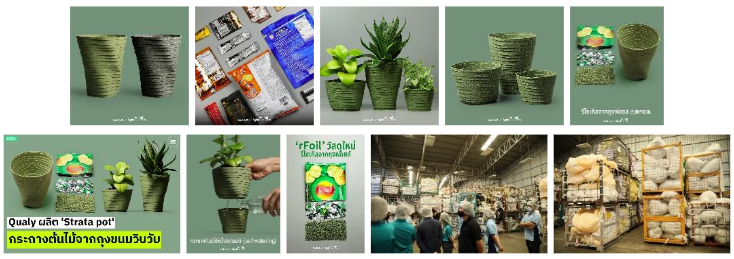 Environmental products from recycled plastic pellets from ‘rFoil’ glitter bags.
Assoc. Prof. Dr. Rattanawan Mungkang, Center of Expertise in Environmentally Friendly Business Strategy (VGreen), Faculty of Environment, Kasetsart University, co-produced ‘Strata pot’, a plant pot from ‘rfoil’ material, recycled plastic from foil bag packaging or a glittering candy bag. The plant has also won the 2022 Design Excellence Award (DEmark).
Sachets containing various consumer goods, the inside of which contains shiny silver foil (also known as a ‘glitter bag’). Currently, it cannot be recycled, and there is no proper disposal method, it is not desirable, and saleng does not accept it. It is often managed by burning it for energy or leading to waste ponds. Therefore, the research project ‘rFoil’ material development or innovation of plastic pellets from recycling foil pouches or sparkling bags can be molded into various products with regular injection molding machines.
The project also expands ‘Developing environmental products business model from new plastic resins on the circular economy concept’. In addition to addressing the problem of plastic waste, it also extends to entrepreneurs to create value from this type of waste. This could result in aggressively recycling waste from these envelopes in the future, reducing greenhouse gas emissions, and increasing the value of waste.’
2.8.14

Banana Leaf Cockerel Press
Foam and plastic containers used to contain single-use food pose waste management and environmental problems with increasing volumes and also affect consumer health if applied to heated food, and foam or plastic may be attached to the container as it has not been cleaned before being used to package food.
Energy and Environmental Engineering Operations Center, Faculty of Engineering, Kamphaeng Saen Kasetsart University therefore came up with the idea of developing a cheap banana leaf cockerel press. Farmers and communities can use it to create jobs and incomes, which use locally available raw materials such as banana leaves, which are easy to find and are grown in large numbers, and are natural materials that do not contain toxins that are harmful to the health of consumers. In addition, used cockerels and food wastes can be composted to make fertilizer to reduce waste in the community and allow organic waste to be sorted and easily reused because there are no sharp materials to form, causing waste management problems and the environment.
 Assistant Professor Nonglak Lekrungroenggid, Head of Center for Energy and Environmental Engineering Operations, Faculty of Engineering, Kamphaeng Saen, Kasetsart University Kamphaeng Saen Campus has been selected for the 2022 ‘Outstanding Innovation of the Year’ award for Agricultural and Environmental Innovation for its work on ‘Innovative Banana Leaf Cockerel Press and Leaf Container’. The award was presented by Gen. Paiboon Kumchaya, Privy Councillor/Director and Deputy Secretary-General of The Phradabos Foundation at the 2022 Thai Award Ceremony honoring the Path of Life, One Million Dares to Give Back to The Land on Friday, May 20, 2022 at the Royal Thai Air Force Auditorium, Bangkok.
2.8.15
 Hydraulic Hyacinth Material Nursery Pot Press
Hyacinth is a weed that is constantly causing problems in Thailand because hyacinths can reproduce quickly. It also obstructs waterways and causes sewage problems. Kasetsart University, Kamphaengsaen Campus, foresees this problem, so it has been conducting research to find ways to eliminate hyacinths and their continued use. By Assistant Professor Bharat Kunchorn na Ayutthaya and Professor Nonglak Lekrungroenggid, Department of Agricultural Engineering, Faculty of Engineering, Kasetsart University Kamphaeng Saen campus has researched plant and nursery pot presses from hyacinth materials using hydraulic systems. The hyacinth pot press has one hydraulic power plant kit consisting of an oil tank, a 1.5 hp three-phase pump and motor, an oil pipeline, a pressure gauge, and a control valve fastened to the compression bracket, which has an inverted U-shaped body, and a 6-inch cylindrical pot that can be used to extrusion plant pots or seedling nursery pots.
This hydraulic plant and nursery press machine, in addition to using dried hyacinth material, also applies scrap materials from agriculture and other industries, such as sawdust, coconut flak and coconut fiber, and dried leaves. It’s another piece of research that has helped put hyacinth to good use, reduce the use of plastic bags or pots, suit communities on the waterfront with large amounts of hyacinths, and increase revenue from the production of plants and nursery pots.
2.8.16
 Design and development of electric vehicles
From the idea that fuel energy is an extremely valuable energy, and that the more days it will be exhausted from the earth. As a result, the world is becoming increasingly conscious of the environment and sees oil-burning engines as energy-driven as one of the key contributors to the destruction of the Earth’s atmosphere. Assistant Professor Dr. Kittipong Yaovaja, Head of the Advanced Robotics and Automation Research Group and responsible for the Robotics and Automation (International) Course, Kasetsart University, Sriracha Campus, Sriracha Faculty of Engineering thus came up with the idea of inventing a vehicle that uses other energy to replace it, reducing pollution from fuel combustion. Therefore, prototype electric vehicle projects were born to promote energy savings and invent new technologies to save fuel energy and help reduce global warming.
The design and development of electric vehicles is to redesign the existing electric vehicles to make them more efficient, redesign the structure to be able to withstand more force by designing the vehicle as a 4-wheel drive, 2 rear wheels and seats to accommodate up to 5 passengers, designing the transmission with chains and gear ratios to be able to adjust the speed as needed.
Advantages of producing and operating electric vehicles
– Environmentally friendly and does not damage nature.
– Reduce fuel costs.
– Good early speed and significantly quieter engine noise.
– Continuous speed, good city driving.
2.8.17
 Solar electric boat watering plants in garden grooves.
Thailand is an agricultural country with a lot of agricultural land. Water is therefore necessary for farmland. As a result, farmers have had to adapt and find new techniques for watering crops in their.
Professor Dr. Pawin Thanpattranon, Department of Agricultural Engineering, Faculty of Engineering, Kamphaengsaen Kasetsart University Kamphaengsaen campus has developed a remote-controlled solar watering boat to facilitate users or farmers and increase productivity to find the efficiency of the plant irrigation system, so that farmers can use the inventions created to water horticulture efficiently and save farmers’ costs.
Highlights of innovative work
- Reduce labor consumption in watering plants in garden grooves.
- Reduce the time of watering plants.
- Get 1 remote controlled solar watering boat.
- Get a remote-controlled solar watering boat that can actually bring renewable energy to life.
2.8.18
 Department of Aerospace Engineering at Kasetsart University hereby congratulates students for completion of Yaan-X project.
Department of Aerospace Engineering Kasetsart University congratulates the students for participating in Yaan-X project, which is the implementation of clean energy innovations for various vehicles, starting with eVTOL or Electric Vertical Take-Off and Landing, an electric vehicle that can take off and land vertically, also known as ‘flying taxis’, through project management for 01215475 Project Management for Aircraft Design and Development and 01215474 Aviation System Life Cycle Cost Analysis. It is taught by Prof. Thanik Nithiphanthawong (Special Lecturer) and supported by Asst. Prof. Dr. Panumas Arundachawat.
The analysis begins with the technological feasibility of project charter, conducts designs from Conceptual Design to Preliminary Design, and studies the workpieces of each system in the Detailed Design section, taking into account the design and testing, production, use, and maintenance by applying various theories and knowledge to create products with practical possibilities. It is another important starting point for the development of electric aircraft that will lead to the aviation of the future.
2.8.19
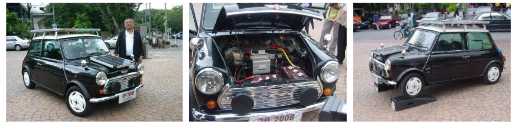 Engineering University kaset builds Thailand’s first solar–powered Mini EV prototype.
The Faculty of Engineering, Kasetsart University has successfully developed Thailand’s first solar-powered Mini Electric Vehicle (Mini EV), practical, cost-effective, and supporting the situation of reduced and depleted oil in the future.
Assoc. Prof. Montri Khamchoo, Associate Dean for Academic Services and Special Affairs, Faculty of Engineering, Kasetsart University, who converted the Mini Rover to a solar-powered Mini EV, said, ‘As a result of the faculty of engineering’s focus on campaigning to reduce global warming and find alternative energy alternatives to oil, as well as being the Green Campus of Kasetsart University, the Faculty of Engineering has been able to innovate and develop fuel-efficient vehicles in various ways.
For the said Mini EV, it is a pilot vehicle of the Faculty of Engineering by modifying and installing solar panels on the roof of the car to support solar energy, and converting the solar energy obtained from the solar panels into electrical energy, collecting it on the front and trunk batteries, and driving a small electric motor. The battery can be charged in two ways: using solar panels to receive solar energy and charging it by plugging in a conventional power outlet.
2.8.20
 Photovoltaic pumping and mobile water filtration systems.
Shallow groundwater management for agriculture and consumption in drought solutions with photovoltaic pumping and mobile water filtration systems. Research by Assoc. Prof. Dr. Wirakaset Suanphaka, Department of Civil Engineering, Faculty of Engineering, Kasetsart University
The research can determine the potential for shallow water sources to be found in agricultural areas by applying modern geophysical survey technology to assist in subsurface scanning. Analyze groundwater sources, establish movable photovoltaic pumping systems that are suitable for farmers in each area, save farmers’ costs on fuel costs, help manage agricultural water and consumer water appropriately.
Scope of work for the development of pumping and filtration systems, both mobile and permanently installed solar energy in the area of mobile photovoltaic pumping system, moving with wheels, size 2 panels, using 600 watt submers pump system weighing 150 kg, pumping rate 3,000 liters/h (sump depth of 15 m).
This study expands the research, combining geographic information systems and remote sensing knowledge with groundwater surveys by determining where shallow water bodies can be found in agricultural areas before conducting a detailed survey with electromagnetic (EM) scanning through the soil layers and then determining where surface water and groundwater can be found. The potential of groundwater sources in the area varies depending on the terrain and reservoirs.
Benefits
– Help address urgent issues, agricultural water management in and around drought-affected farmers.
– It is a model of shallow and deep groundwater management to increase productivity, increase revenue, and save costs.
– Model effective drought-assisted water management practices in other areas across the country.
2.8.21
 Solar Melon Planting Kit
Use natural renewable energy to grow melon solar energy systems that save energy. There is a polycarbonate moisture-proof roofing system, which is several times more durable than thatch plastic. This reduces the roof replacement cycle. The solar melon growing kit will help reduce the problem of fertilizer consumption loss in melon growing systems in old greenhouses. It helps to control the quality of output easily, can reduce labor problems, effectively prevent melon pests, reduce management problems and clogging of dropper heads.
Highlights of solar melon growing kits
– Reduce production costs
– Polycarbonate plastic roofs can withstand sunlight.
– Get quality output
– Energy saving
– Easy to handle
– The structure is steel.
– Easy to move
The solar system can be used for growing many greenhouse crops such as pumpkins, cucumbers, gourds, lentils, sweet peppers, tomatoes, as well as breeding both agronomy and quality control horticulture such as andrographis herbs, Thai ginseng herbs, rice varieties, corn varieties or ornamental flowers, etc.
2.8.22
 Hydroponics, photovoltaic energy
Hydroponics Photovoltaic energy has the concept of solving the problem of growing crops in schools, including management problems, fertilizer damage problems that flow out of the system, labor cost problems. Hydroponics, photovoltaic energy uses renewable energy from nature that saves energy and reduces the loss of fertilizer use in old greenhouse growing systems efficiently, suitable for growing crops in areas where electricity is inaccessible and wilderness.
From the initial idea of Mr. Saran Hongsakornprasert, an agricultural scholar. Agricultural Technology Research and Transfer Center The Faculty of Agriculture, Kasetsart University, to cultivate vegetables in the houses or living areas of urban people, which have limited space, or even on the rooftops of condominiums or high-rise buildings in the city, can grow vegetables for eating by themselves. Therefore, the research results are a series of vertical vegetable growing alternatives to meet the needs of urban farming, low space use, easy care, and also get clean and safe non-toxic vegetables.
2.8.23
 Composting Machines
Hydroponics Series Photovoltaic Energy
Houses or places where there are a lot of people living in it, causing pollution and pollution, especially organic waste, where more than 50% of the waste is discarded without benefit, which is also a problem for the government, lack of landfill space, which leads to problems with the environment, health and livelihoods of the people. Recovering these organic wastes by making them into fertilizers is extremely beneficial and is part of a sustainable integrated solid waste management system.
Composting machine has 2 sizes: 80 liters fermentation tank for household use and 400 liters fermentation tank size for agriculture and enterprises or communities.
Product Highlights
- Applicable to all types of biodegradable organic waste, such as vegetable waste, food waste, dried leaves, weeds, hyacinths, grails, duckweed, corn trees, banana trees, sugarcane leaves, Napier grass, acacia, etc.
- It helps to buoy the force and shortens the composting time.
- No bad smell, environmentally friendly, reduce the problem of fine particulate matter from burning.
- Compost about 80 percent of the raw materials used.
- Easy operation, care and maintenance methods.
- Save energy, help reduce global warming.
2.8.24
 Install organic waste fermentation tank set to produce biogas.
Install a set of organic waste fermentation tanks to produce biogas, feed 50 kg of waste per day, and be trained to detect pathogenic microorganisms in food and drinking water.
Area of action
- Ko Chan Kindergarten, Ko Chan District, Chonburi Province.
- Chonradsadornumrung School, Ban Suan Subdistrict, Muang, Chonburi Province.
- Phanatpittayakarn School, Phanat Nikhom District, Chonburi Province.
- Thetsaban 2 Phraya Si Sunthon Wohan School (Noi Ajaryang Gur), Muang, Chachoengsao Province.
5. Ban Pak Khlong Municipal School, Tha Pradu Subdistrict, Muang District, Rayong Province.
2.8.25
 Developed a wireless remote surface environmental monitoring and transmission kit.
Develop wireless remote surface environmental monitoring and transmission kits and install them in forest areas in 5 eastern provinces, and conduct workshops to strengthen community networks on the recovery and conservation of key natural resources that are fundamental to livelihoods and environmental management to support sustainable development of communities based on local wisdom.
Remote surface environmental monitoring unit installation area wirelessly.
- Khunanantha Park Herb Garden, Kasetsart University, Sriracha Campus, Chonburi Province.
- Ban Tha Phak Chi School, Phra Phloeng Subdistrict, Khao Chakan District, Sa Kaeo Province.
- Ban Rom Pho Thong School, Klongtakrao Subdistrict, Tha Takiab District, Chachoengsao Province.
- Ban Khlong Kum School, Antimony Thong, Bo Thong District, Chonburi Province.
- Wat Khao Soi Dao Nuea, Sai Khao Subdistrict, Soi Dao District, Chanthaburi Province.
- Wat Nam Kroi, Huai Thap Mon Subdistrict, Khao Cha Mao District, Rayong Province.
2.8.26
 Electric Vehicle Charging Stations and Innovative, Segmented Battery Power Management for Photovoltaic Nanogrid Systems.
Kasetsart University Sriracha held the opening ceremony of ‘Electric Vehicle Charging Stations under the Project of Installing Electric Charging Stations and launching innovative, modular battery power management for photovoltaic nanogrid systems.
On July 12, 2019, Kasetsart University, Sriracha Campus held the opening ceremony of ‘Electric Vehicle Charging Station under the Electric Charging Station Installation Project’ and launched the innovation and workshop ‘Innovative Battery Management for Photovoltaic Nanogrid Systems’ Innovation of Decentralized Group-Based Battery Energy Management (DBEM) for PV Nanogrid Systems under the Solar Nanogrid Demonstration System Project with innovative, group-based battery energy management funded by the Energy Policy and Planning Office (EPPO).
With the honor of opening remarks from Dr. Krissanapong Kiratikara, President of Kasetsart University. Then watch the dbem innovation introduction video and discuss the background and objectives of DBEM innovation by Asst. Prof. Dr. Umarin Sangpanich, Project Director, lectured on battery energy storage optimization techniques for autonomous photovoltaic systems, photovoltaic nanogrid demonstration systems with grouped battery energy management innovations, segmented battery energy management innovations, techniques for installing photovoltaic nanogrids with innovative, cost-effectiveness of investing in DBEM systems in photovoltaic nanogrid systems. Then the collaborators consulted, joined in the comments.
At the electric vehicle charging station on the side of the Phala Suksa Building and at the Green Smart Energy Technology Research Group (G-SET), Building 2, Engineering Operations, 3rd Floor, Kasetsart University, Sriracha Campus.
2.8.27
 Electric Vehicles
Faculty of Engineering Sriracha, Kasetsart University Sriracha Campus is scheduled to host the 24th anniversary of the establishment of the Faculty of Engineering Sriracha on Thursday, November 26, 2020 at Building 23, conducting engineering research as a tradition and a good culture for staff and students to commemorate the organization’s founding. It was honored by Assistant Professor Dr. Seri Kunchaenak, Vice-Chancellor of Sriracha Campus, as chairman of the congratulations, and Associate Professor Dr. Sattaporn Chueapheng, Dean of Sriracha School of Engineering, said the report and presented the certificate to the agency that has supported the faculty well on this occasion. Kasetsart University, The Faculty of Engineering Sriracha has signed a Memorandum of Understanding (MOU) with three agencies namely Nissan Motor (Thailand) Co., Ltd., Thonburi Energy Storage Manufacturing Co., Ltd., and Mercedes-Benz Manufacturing (Thailand) Co., Ltd. to promote cooperation in electric vehicle technology to develop educational potential for students, third-party training, research, and academic services. Signing of the Memorandum of Academic Cooperation between Nissan Motor (Thailand) Co., Ltd. and Kasetsart University by the Faculty of Engineering Sriracha under the Nissan electric vehicle donation project for educational purposes. It was honored by Mr. Sanphet Tangsaowaphak, Vice President, Nissan Motor (Thailand) Co., Ltd., along with Associate Professor Dr. Sattaporn Chueapheng, Dean of the Faculty of Engineering, Sriracha, signed a memorandum of understanding on academic cooperation in which the company donated the Nissan Leaf, one first-generation electric vehicle, to the faculty to support educational activities, the provision of teaching and learning in electric vehicle systems and other related courses, to be used as a model for research and development in electric vehicles for faculty, master’s and doctoral students, and training in electric vehicles for students and general interested parties.
2.8.28
 Fomm 1
The Faculty of Engineering, Sriracha, has used Fomm 1 for teaching in electric vehicle systems and other subjects related to electric vehicles, and to help open the door to learning about engineering and technology of electric vehicles through hands-on experience for students and educational personnel. This is key to strengthening the ecosystem of sustainable vehicles.
Kasetsart University is committed to being a part of enhancing educational and research opportunities, which will help propel Thailand towards a society that uses more electric power systems to pave the way for a sustainable future.
Learning and studying real-world EV technology closely will help drive valuable research, including the creation of experts with expertise, particularly in the field of electric vehicles.
2.8.29
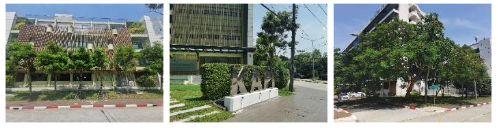 Advanced plant manufacturing facilities with artificial light
On the 31st anniversary of the establishment of KAPI, the Institute operated inside the advanced plant production plant building with fully artificial lighting. The building has adopted advanced technologies to control the growth and production of plant bioactive compounds, as well as key extraction technologies, in order to obtain consistent quality bioactive compound products suitable for use as active ingredients in healthcare products, cosmeceutical products, and medical products, which are recognized nationally and internationally. It also provides academic services, knowledge transfer and technology, social and commercial extension and technology, and integration to support teaching and learning, which promotes Kasetsart University’s mission to be a world-class university of learning, research and innovation. For sustainable development based on the science of the land The interior of the building consists of 1st floor, bioactive compound extraction plant at pilot level.

Providing a full range of services for the extraction of bioactive compounds from plants at an expanded capacity level, ranging from providing 10 liters of hot extractors and 20 liter evaporators to evaporating solvents used in the extraction process. Before entering the drying process in 2 forms, the freeze dryer under the 50-liter vacuum and the 10-liter/hour spray dryer support advanced research and technology and commercialization.
Bio-reactor chamber.
It consists of a 70-liter stirred bioreactor tank, as well as control units and equipment needed for submerged fermentation under the cooperation of KAPI Institute and University Sains Malaysia, Malaysia. Such bioremediation tanks are currently used for bacterial culture research for the production of Polyhydroxyalkanoates bioplastics (PHAs).

2nd floor, artificial light plant factory.
It is the production of plants in a fully controlled environment based on the factors that the plants need. It uses artificial lighting technology, which is independent of the ever-changing external environment factors. Therefore, the quality of crop yields can be controlled consistently as needed, high quality and safe. It can also be used to control the activation of important bioactive compounds in medicinal plants, supporting the use of bioactive compounds in healthcare products, cosmeceutical products, and medical products.
Kapi Institute’s artificial light plant production facilities come in 3 forms:
- Artificial light plant production in the field of food crop production, i.e. high nutritional vegetable production, with the study of factors suitable for the growth of Thai-foreign salad vegetables.
- Artificial light plant production facilities for the production of Thai medicinal plants include the development of andrographis production patterns to obtain andrographolides for medical use.
- Artificial light plant production facilities for high-value economic plants, including the production of CBD from the cannabis-hemp plant group for use in the field.

3rd floor, Plant Production Technology Laboratory.
Providing services for commercial production of good crops, increasing the number of sterile crops to farmers and individuals, strengthening the country’s biotechnology, strengthening the Thai economy sustainably.

The 4th floor is a space for research and development, the use of artificial light in the nursery of important economic seedlings to gather economic tree breeders and create complete seedlings, ready for planting on an industrial scale.
Kasetsart Agricultural and Agro-Industrial Product Improvement Institute (KAPI) provides specialized research and analysis services with advanced analytical tools under the control and conducted by skilled personnel, ready for research and development in agriculture and agro-industry at Non-food, to expand research and technology to society, and to support the teaching and learning of Kasetsart University.
2.8.30
 CiiBA team won 3rd prize in the world IMAV 2022 agricultural unmanned aerial vehicle competition in greenhouses.
A team of professors and students from the Department of Electrical Engineering and the Department of Aerospace Engineering, Faculty of Engineering, under the name CiiBA team, built Thailand’s reputation by winning the 3rd prize in the world from participating in agricultural unmanned aerial vehicle competitions in greenhouses. The International Micro Air Vehicle Conference and Competition 2022 (IMAV 2022) was held from 12 – 16 September 2022 in Delft, Netherlands.
IMAV 2022 is the world’s largest automated robotics competition held for the 13th year, with 25 teams from universities and private companies from 11 countries around the world participating, such as the Netherlands, Spain, Germany, Brazil, England, Thailand, etc. In the competition, each team must build an automated flying robot or drone to perform various missions.
CiiBa team is the only qualifying team from Thailand. The CiiBa team participated in the Greenhouse Challenge, an automated flying robot competition for use to survey and inspect tomatoes in greenhouses. Flying robots must take off to explore tomatoes, automatically detect abnormalities such as insects and plant diseases through artificial intelligence, and collect information about the environment inside the greenhouse, including temperature, humidity, etc. Carbon dioxide at various points inside the greenhouses as well. In this competition, the CiiBa team finished 3rd overall and were the best team from the university in the competition.
CiiBa team members include undergraduate-doctoral students in the Department of Electrical Engineering, namely, Mr. Natchanon Nonthapiboon (Bachelor’s Degree), Mr. Kan Yajai and Mr. Sittiporn Tantiborirak (Master), and Mr. Naphanat Thongton (Ph.D.). Undergraduate students in the Department of Aerospace Engineering include Ms. Jaravee Promnari, Mr. Kittiphon Faidet, Ms. Rujipa Chayutaphong, Mr. Pitipol Kuakul, Mr. Sirin Ketruam, Mr Pakaphol Chaiwongnart, Mr. Ratthanan Lapsuksathit, Ms. Sarocha Jetawattana, Mr. Woranop Laitrakul.
With an assistant professor. Dr. Kanchanaphan Sukwitchai, Department of Electrical Engineering and Assistant Professor Dr. Chinnapat Thiphayophas, Department of Aerospace Engineering, is the team advisor.
2.8.31
 Solar Bellows https://www3.rdi.ku.ac.th/?p=48693
Solar bellows developed in response to Kasetsart University’s policy of becoming a green university, in addition to working out cycling, also reduces pollution on campus. Due to the increasing number of bicycle users resulting in inadequate repair, maintenance, and tire inflating facilities to meet the demand of users, prototype solar inflators have been developed to support the growing demand. Bellows can be used to inflate bicycles, motorcycles, as well as cars using solar energy by Asst. Prof. Dr. Monthon Thanuttamwong, Department of Environmental Engineering, Faculty of Engineering, Kasetsart University.