Energy And Climate Change


2.1 Energy efficient appliances usage
Kasetsart University announced the guideline of electrical energy conservation policy for all departments in the university. The principle to use electricity efficiently, cost-effective, and has the greatest benefit which must start from the method of choosing electrical appliances that are effective and suitable for use. As well as, knowing how to use that electric appliances. This is not only helping to save energy but also having a good impact on the public, in terms of preserving nature and the environment.
Proactive policy of approach on Green University
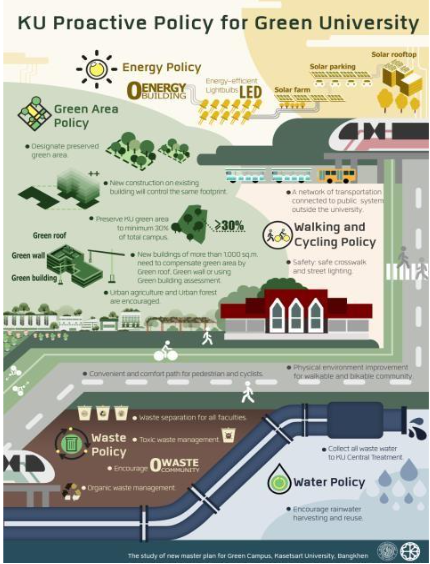
Kasetsart University has implemented a policy requiring all departments to use energy-efficient electrical equipment certified with Electricity Saving Label No. 5, such as LED light bulbs. The university has already replaced over 117,954 energy-saving bulbs, representing 94.13% of all light fixtures. Additionally, the university has replaced 20,836 air conditioning units with energy-efficient models, accounting for 84.56% of all air conditioners. The university has also replaced 11,981 computers with Energy Star certified models, representing 91.24% of all computers. Other energy-saving appliances, including fans, refrigerators, and electric kettles, have been replaced 945 units in total, covering 95.85% of all electrical appliances.Using energy-efficient equipment is expected to reduce electricity consumption by 3-5%.
The Way Forward towards the Sustainable University
Kasetsart University places great importance on ensuring that all equipment used to support teaching and learning is both modern and energy-efficient. Efficient energy use not only helps reduce energy consumption and costs but also contributes to solving environmental problems, promoting a sustainable society. Recently, the Electricity Generating Authority of Thailand (EGAT) introduced higher energy-saving standards for appliances and products under the new " Label No.5 with Stars ", raising the benchmark from the previous " Electricity Saving Label No. 5. This presents an opportunity for Kasetsart University to adopt these new technologies and apply them in various areas, aligning with the university's energy-saving policies.
The use of energy-efficient equipment is part of the "Way Forward" strategy for sustainable development. Reducing electricity consumption helps lower greenhouse gas emissions and conserves natural resources. Moreover, it reduces energy costs within the university.
Selecting appliances that meet energy efficiency standards, such as devices with the Electricity saving label No. 5 for highly efficient technologies like LED lighting or inverter air conditioners, will further enhance energy efficiency. Promoting proper usage knowledge among staff is another crucial step toward sustainable energy use.
In summary, adopting energy-efficient appliances aligns with the "Way Forward" as it represents a key step in addressing climate change and building a sustainable future.
The Benefits in Line with the Way Forward:
1. Reducing Energy Costs: Using energy-efficient appliances helps lower electricity
consumption, directly reducing expenses for households and businesses.
2. Minimizing Environmental Impact: Reducing energy use cuts greenhouse gas emissions, decreases fossil fuel consumption, and mitigates pollution, which are major factors in climate change.
3. Developing Green Technology: The "Way Forward" emphasizes developing technologies that promote energy efficiency and sustainability. Energy-efficient appliances, such as LED bulbs or those with the Electricity saving label No. 5, are examples of technologies that allow for balanced use of natural resources.
4. Raising Awareness: Educating consumers about choosing energy-efficient appliances and using electricity wisely fosters a collective effort to protect the environment.
5. Meeting Future Energy Demands: As the global population and technology continue to grow, the demand for energy will increase. Energy-efficient appliances will help meet future energy.